
From brown to blue: the colour of the sea highlighted on the Autonomous Study platform
Vanda Brotas, researcher at MARE/ARNET and professor at CIÊNCIAS of ULisboa, participated in the latest webinar promoted by Estudo Autónomo and Escola Azul. The webinar ‘What colours are hidden in the sea’ had 227 participants, including 173 secondary school students, who gathered to discover why the sea can have different colours. 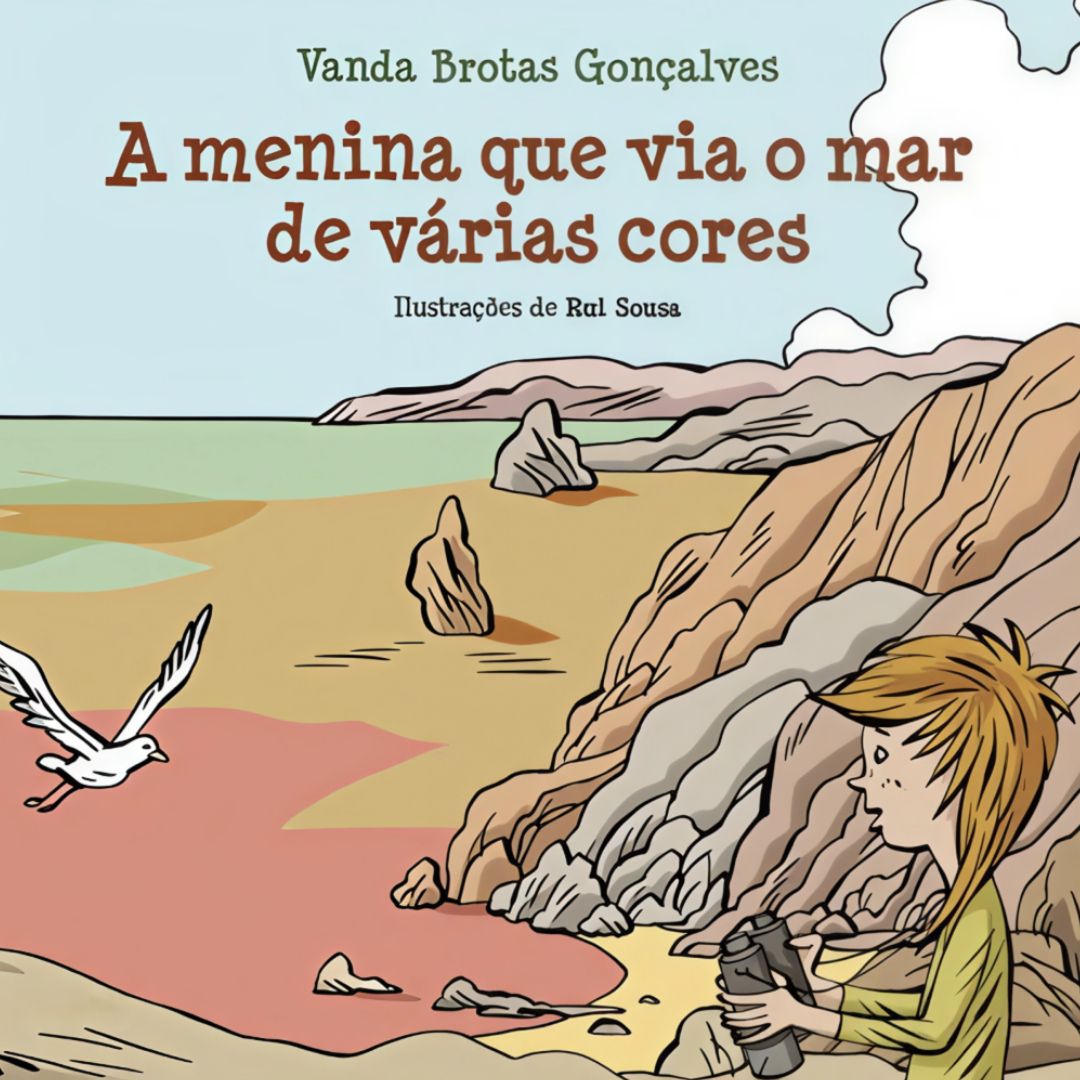
To this end, throughout the session, Vanda Brotas alternated between explaining scientific concepts and presenting her book A Menina Que Via o Mar de Várias Cores (The Girl Who Saw the Sea in Many Colours). ‘I like to come up with a story to explain scientific subjects,’ she said, adding that her books were born out of a desire to bring young people closer to science and promote scientific literacy.
The researcher began by explaining how the colour of the sea is influenced by the components present in the water, from sediment particles that make the water more brownish to microalgae capable of giving it greenish or even reddish tones. To illustrate these phenomena, she showed images of Portuguese coastal areas, contrasting the blue tones of the waters of the Azores with the darker, brown colours typical of areas influenced by large rivers, such as the Tagus.
The role of phytoplankton in oxygen production and ecosystem balance was one of the key messages that Vanda Brotas conveyed to the students. These organisms, invisible to the naked eye, are the basis of the marine food chain. "Through photosynthesis, phytoplankton produces as much oxygen as all terrestrial plants. Therefore, for every two breaths we take, we can say that one breath of oxygen comes from the sea and the other comes from terrestrial plants," she explained.
Monitoring phytoplankton quantities in the ocean is therefore important, and satellites are a fundamental tool. Continuously orbiting the planet, they enable the identification of colour variations associated with the presence of microalgae, signals that are subsequently translated into cell concentration. Even so, the researcher emphasised that the information obtained from space needs to be validated on the ground. What fascinates her most about this process, she said, is the dichotomy between visible and invisible: ‘it is invisible when we are one metre away and visible, by satellites, at 800 kilometres’.
In the question and answer session that followed, moderated by two students from the EB2,3 Dr. João das Regras School, the researcher reinforced the importance of citizen science and stressed that schools can play an active role in gathering information, contributing to a better understanding of phenomena such as macroalgae invasions, a problem that Portuguese beaches have faced in recent years. The session ended with a message of hope: ‘I think we will turn around the issues that afflict us on the planet, and therefore the colour that best represents the current state of the ocean is still blue.’
The webinar is available on the Independent Study platform and is part of the ebook An ocean that connects us, which was launched on 16 November, National Sea Day, and includes several webinars hosted by MARE researchers.
Written by Joana Cardoso