
A new path for marine planning in Antarctica
Catarina Frazão Santos' team's work in Antarctica arose from an unexpected discovery: despite decades of polar research, there was no formal process for marine spatial planning on the continent. Through the MSPOLAR project and now with the PLAnT project, the researcher's team is filling this gap and putting the issue on the international agenda. 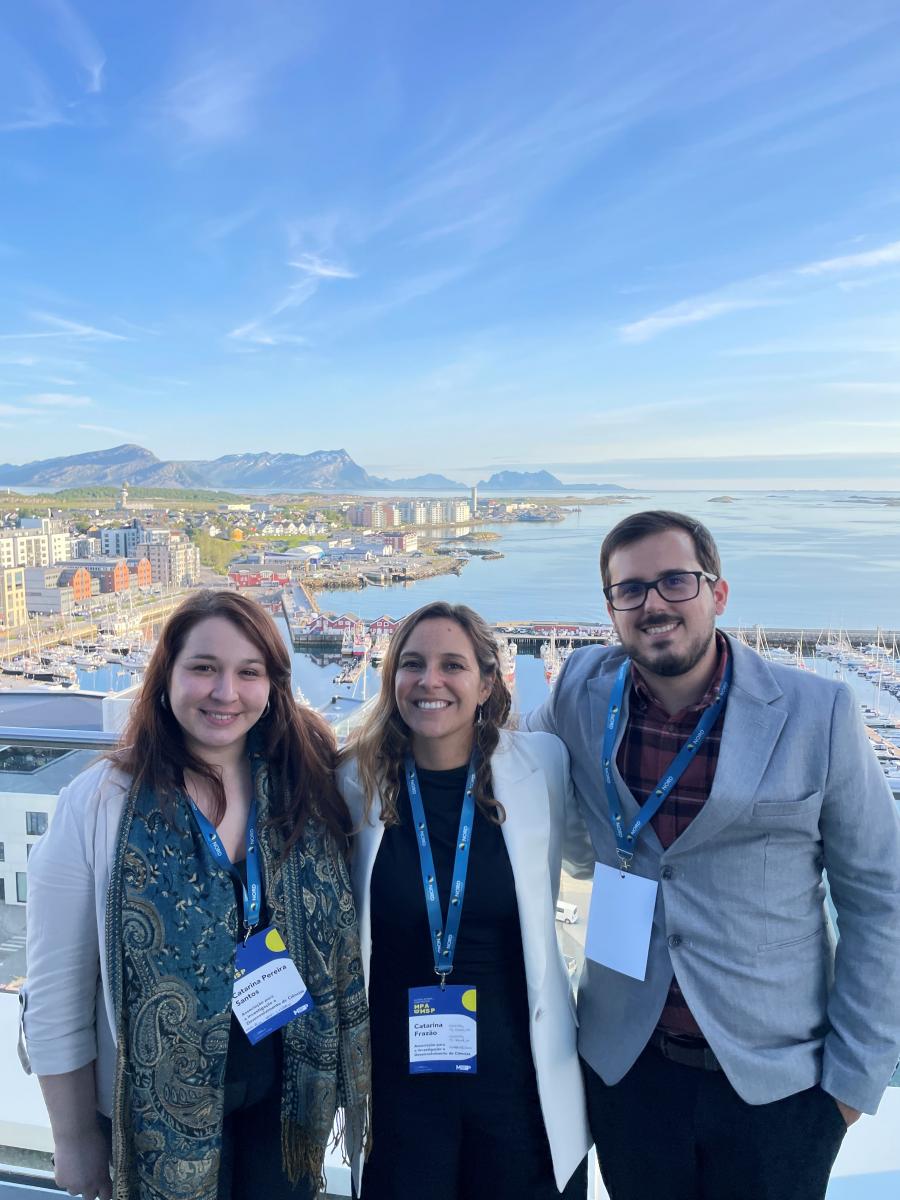
The gateway to the polar environment opened with the MSPOLAR project: Marine spatial planning in Polar Regions, an exploratory project funded by the Foundation for Science and Technology (FCT) that compared marine spatial planning initiatives in the Arctic and Antarctic. The OceanPlanning Lab team, coordinated by Catarina Frazão Santos, researcher and professor of CIÊNCIAS at MARE/ARNET, ULisboa, quickly realised that there was a stark contrast between the two regions. ‘We saw that there were several articles on the Arctic, but nothing on Antarctica,’ recalls Catarina Frazão Santos. The Arctic had national planning processes, while in Antarctica there was no formal structure, only sectoral management.
This absence became the starting point for imagining something new. Working at the poles was, in fact, a long-standing desire of the team. ‘A few years ago, we thought about submitting a project to go to the Arctic or Antarctica. It was literally that: let's go to the poles,’ says Francisco Borges. Catarina Pereira Santos describes joining the project as a happy coincidence and a leap into an ‘almost alien’ world.
This impetus led to the creation of PLAnT (Planning for sustainable ocean use in Antarctica under global change), a European Research Council (ERC) project that began in March 2024 and will run until 2029. The goal, in the words of Catarina Frazão Santos, is to understand ‘what are the main challenges and opportunities for developing marine spatial planning in Antarctica that takes climate change into account and can be replicated in other parts of the world.’
Research for better management
PLAnT is currently developing three lines of research. The first involves analysing more than 30,000 documents produced over sixty years of Antarctic Treaty meetings. Catarina Pereira Santos is developing a tool for analysing large amounts of information, with the support of machine learning and text mining techniques, which allows “navigating and quantifying what is said in the documents, using sentiment analysis and thematic analysis”. The aim is to “streamline the process, trying to bring together the worlds of natural sciences and social sciences”, she explains.
For the second line of research, Francisco Borges is reviewing the available information on species distribution modelling in the Antarctic region and assessing how climate projections and human activities can be integrated into these models. ‘There are few studies that bring these two dimensions together,’ he points out. The aim will be to identify “species that have been little studied but have both ecological and socio-economic value, and to propose the best way to integrate existing climate projections with human uses, thus achieving a holistic approach to modelling species distribution in the region”.
As part of the third line of research, participatory mapping will be developed based on interviews with scientists and other stakeholders in the region, with the aim of obtaining an overview of the various sectors and agents involved. The pilot interviews will begin during the campaign to be held in February 2026, which will take the three researchers to Antarctica for the first time.
From science to diplomacy
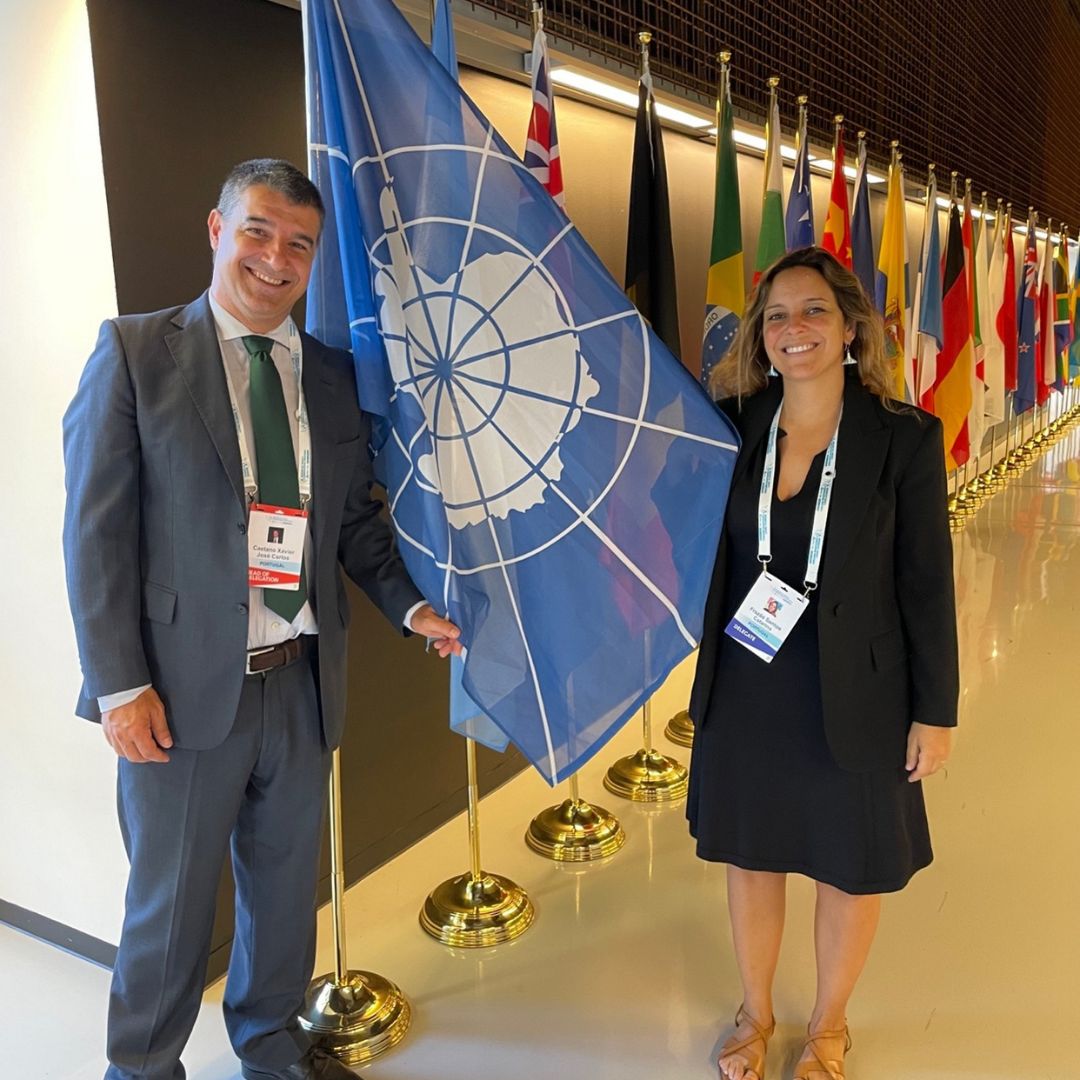
For more than six decades, marine spatial planning had never been formally discussed under the Antarctic Treaty, although the issue had been raised in the 1980s. But in 2024, everything changed. The article that Catarina Frazão Santos published in Science magazine presented Antarctica as the ideal place to test climate-smart management, paving the way for the first official debate on the subject. ‘The article came out three days before the Antarctic Treaty meetings began; it was intentional to have an impact,’ explains Catarina Frazão Santos.
The result was immediate. The topic was put on the agenda by the team and returned the following year, with the researcher now part of the Portuguese Delegation. ‘In terms of impact, it was very significant,’ she says.
There were several reasons for the lack of discussion on this topic. The main use in Antarctica has been fishing, which has been managed sustainably since 1982 by the Commission for the Conservation of Antarctic Marine Living Resources (CCAMLR). However, the exponential growth of tourism in the region has reached proportions that require better management of the activity, and this is done under the Antarctic Treaty. According to Catarina Frazão Santos, ‘it is through the management of marine space that the different uses, fishing, tourism, research and conservation are managed’. Antarctica needs an integrated vision to respond to what can no longer be managed by isolated sectors.
A rapidly changing ecosystem
According to Francisco Borges, ‘Antarctica plays a central role in the biogeochemical cycles of the global ocean, and we know that climate change has the potential, even in the most conservative and least catastrophic scenarios, to cause substantial changes’.
Catarina Pereira Santos adds that, with the increase in sea temperature, ‘a reduction in the territories available for megafauna, such as orcas, whales and other charismatic organisms in the region’ and a decrease in the areas available for their feeding are expected. This is expected to result in a decline in the populations of these emblematic species, which will affect conservation and tourism. Antarctica is also ‘the last physical frontier’ for many species that, with rising sea temperatures, are moving south.
The trip they will take in February will be the team's first experience in the field. The long journey, weather-dependent flights, life on a base with fifty people and the uncertainty of storms are all part of the challenges. They are packing warm clothes and high expectations. Francisco wants to see ‘a giant iceberg’, Catarina Pereira wants to see penguins and Catarina Frazão Santos wants to ‘see snow from a different perspective’.
And they leave us with a final thought: ‘The Antarctic Treaty was created in a very complicated historical context and continues to work for the common good. It tells us that there is hope and that we must not give up.’
Text by Vera Sequeira and Joana Cardoso