
New Article Reveals Impacts of Ocean Acidification and Warming on Hawaiian Sepiolids
Research published today in the scientific journal Proceedings of the Royal Society B: Biological Sciences, originated from a collaboration between MARE in CIÊNCIAS, Centre for Functional Ecology (University of Coimbra) and the Swire Institute of Marine Science (Hong Kong University, Hong Kong SAR), highlights the responses of the Hawaiian bobtail squid Euprymna scolopes to both ocean acidification and warming during the embryogenetic development, at a molecular level.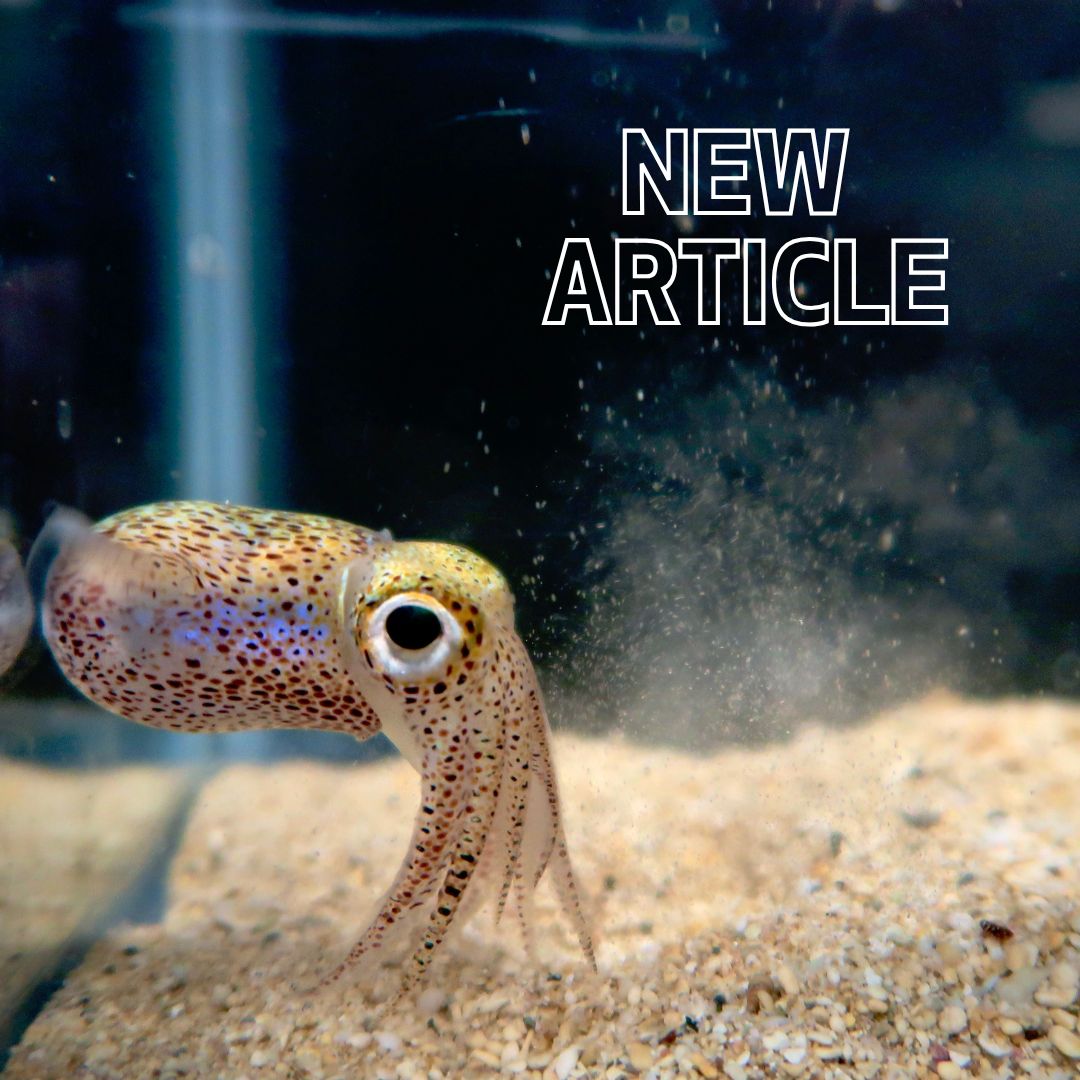
Like fireflies, bobtail squids are capable of bioluminescence (production of light). This small cephalopod mollusc, inhabiting shallow and sandy coastal waters, acquires the luminous bacteria in the first hours post-hatching, hosting the colony in a specialised ‘light organ’. Once colonised, the animals will use the light produced by the bacteria they host as a nocturnal camouflage (counterillumination). Although we have extensive knowledge of the animal’s relationship with its bacterial symbiont under standard laboratory conditions, the effects of environmental stressors on the animal remain poorly understood.
The research was focused on the Hawaiian sepiolid (Euprymna scolopes), found in the Hawaiian Islands' shallow waters, to understand the impact of ocean warming and ocean acidification (levels expected by 2100) on the animal during embryogenesis at the molecular level (gene expression). Understanding these changes in gene expression and the underlying functions allowed to evaluate the state of the bobtail squid’s early stages when exposed to near-future environmental conditions.
According to researcher Eve Otjacques, “this study is the first to apply a molecular approach to investigate the effects of ocean warming and acidification on sepiolids”.
The results confirmed that ocean warming reduces hatching success in the sepiolid, though ocean acidification had an even greater negative effect. Moreover, although ocean acidification elicited the strongest molecular response, with changes in genes related to metabolism and energy production, the study showed that ocean warming also affects the animal's symbiotic ability at the molecular level.
For the researcher, “it was interesting to discover specific genes to be negatively impacted by temperature, which could explain, at a molecular level, the difficulty of this animal to acquire the symbiotic luminous bacteria at hatching (as found in a previous study).”
Linked to a previous study published earlier this year led by the same authors (https://doi.org/10.1111/gcb.70243), which showed that colonisation efficiency was negatively affected by temperature, here, we highlight how temperature may disrupt a specific molecular pathway involved in the initiation of this symbiosis, which may explain the difficulties in colonisation.
Finally, in the current study, it is also suggested the potential for phenotypic plasticity and adaptation of the animal through molecular modulation (RNA editing and alternative splicing) in response to environmental stressors.
To access the article, click HERE
Text provided by researcher Eve Otjacques