
A Investigação de Rita Dias para uma Gestão Sustentável da Água
At a time when water scarcity is becoming a growing concern globally, Rita Dias' research offers a new perspective on wastewater treatment. Her innovative work, focused on removing steroid hormones from wastewater, was featured in the June issue of GreenSavers magazine, pointing to a more sustainable and efficient path for an increasingly scarce and valuable resource. 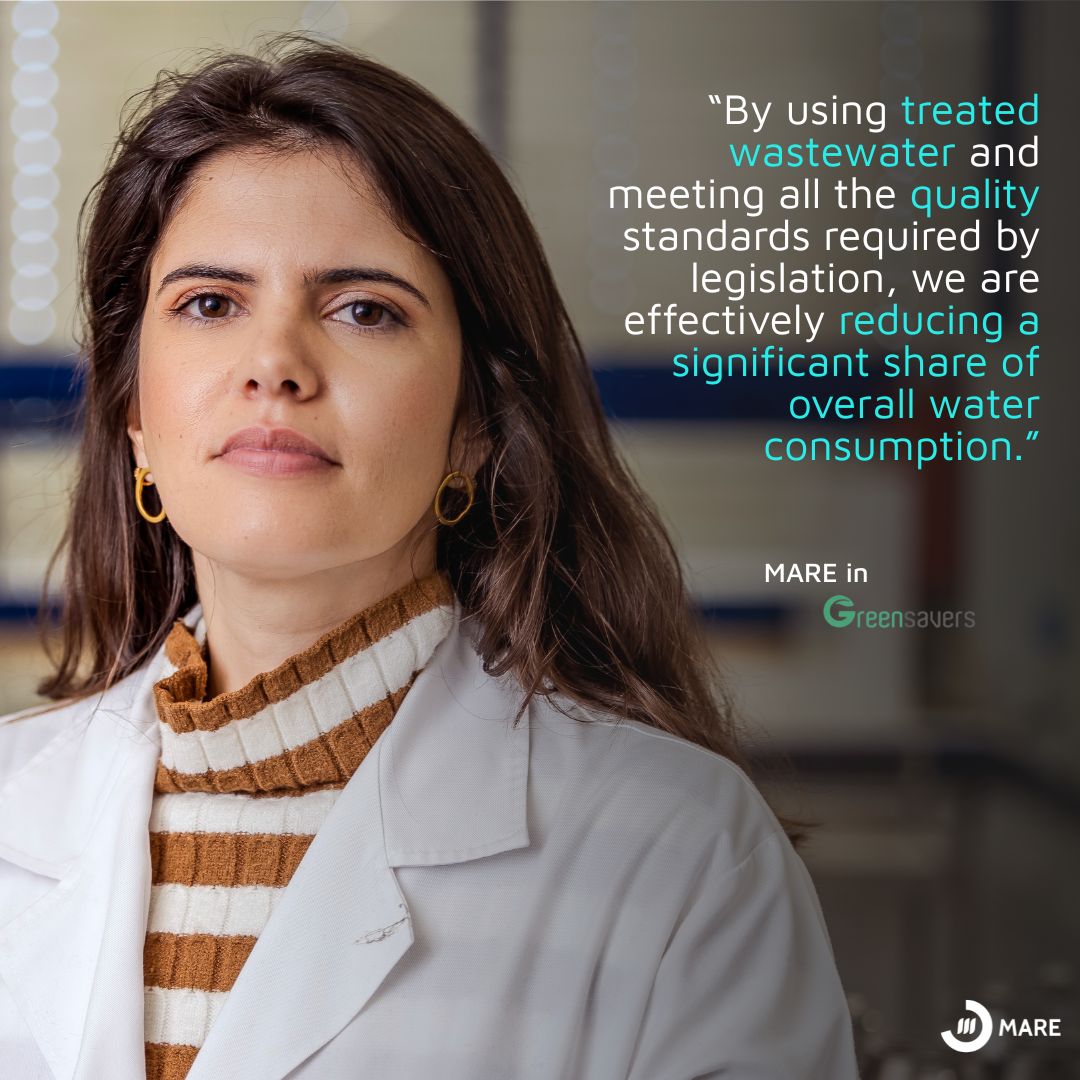
In November last year, Rita Dias defended her doctoral thesis, a pioneering study on how to remove hazardous chemicals—specifically steroid hormones such as ethinylestradiol, estradiol, and estrone—from wastewater. These hormones, found in contraceptive pills and hormone therapies, have a devastating impact on aquatic biodiversity, altering the endocrine system of fish and other organisms, affecting their development and fertility. In addition to affecting aquatic fauna, these substances pose a threat to human health, as they can accumulate in the food chain, reaching dangerous concentrations in the fish we consume.
In her study, MARE researcher Rita Dias explores two promising methods for removing these hormones: the reuse of sludge from water treatment plants (WTPs) and the use of peracetic acid, a more environmentally safe reagent.
The first approach focuses on the use of sludge—waste generated in WWTPs during wastewater treatment. Instead of being discarded, this sludge can be reused to remove pollutants, including steroid hormones. This circular solution not only reduces operating costs but also mitigates the environmental impacts associated with WWTP waste management.
The second method studied involves the use of peracetic acid, an effective disinfectant that is less aggressive to aquatic ecosystems than chlorine. This method could be implemented in existing WWTPs, with reduced environmental impact and without the need for major investments in new infrastructure.
The reuse of treated wastewater, with adequate quality for non-potable purposes, is another area of focus for Rita Dias' research. In Portugal, only 1.2% of treated wastewater is reused. Optimizing the treatment of this water can alleviate pressure on water resources, reserving higher quality water exclusively for human consumption. Rita Dias' approach, by focusing on the safety and efficiency of treatment methods, contributes to smarter and more sustainable water management.
In addition, the work of the MARE researcher is an important step towards creating more sustainable and effective processes capable of responding to today's challenges. Her research opens new paths to a future in which water is treated more responsibly and efficiently, helping to preserve aquatic ecosystems and ensure that future generations can continue to rely on this vital resource.
Text by Patrícia Carvalho