
Unexpected contaminants in Antarctica: the island with two years of memory
A study conducted by MARE at ULisboa Sciences detected unexpected contaminants in Antarctica, ranging from cancer drugs to detergent residues, revealing the dual natural and human pressures affecting Deception Island. 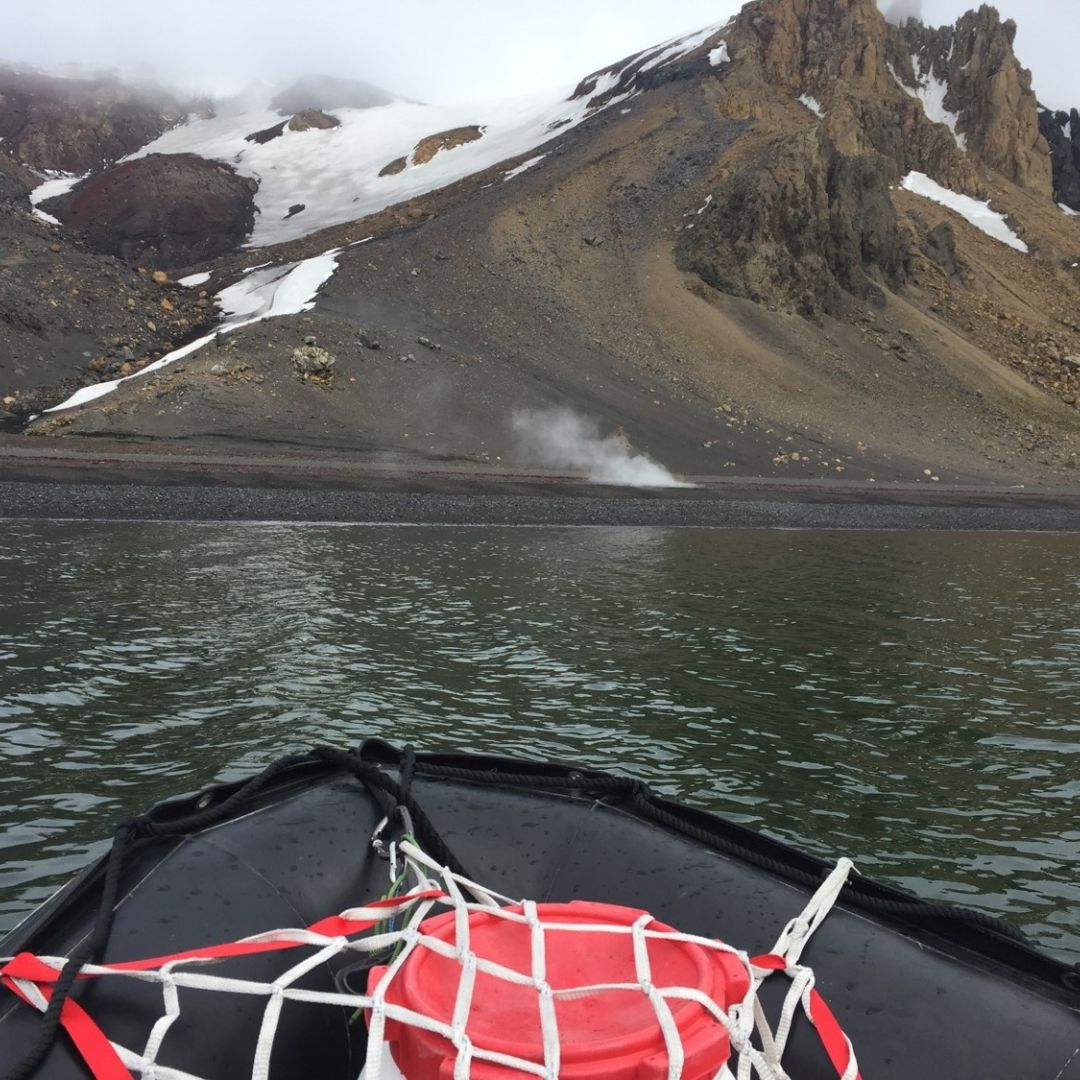
A natural laboratory
Bernardo Duarte's research at MARE/ARNET in Ciências ULisboa began with an unexpected invitation. He was working on pollution in Portuguese estuaries when he was challenged to apply the same approach to one of the most extreme environments on the planet. ‘Do you want to do in Antarctica what you do here?’ he was asked, and he didn't hesitate.
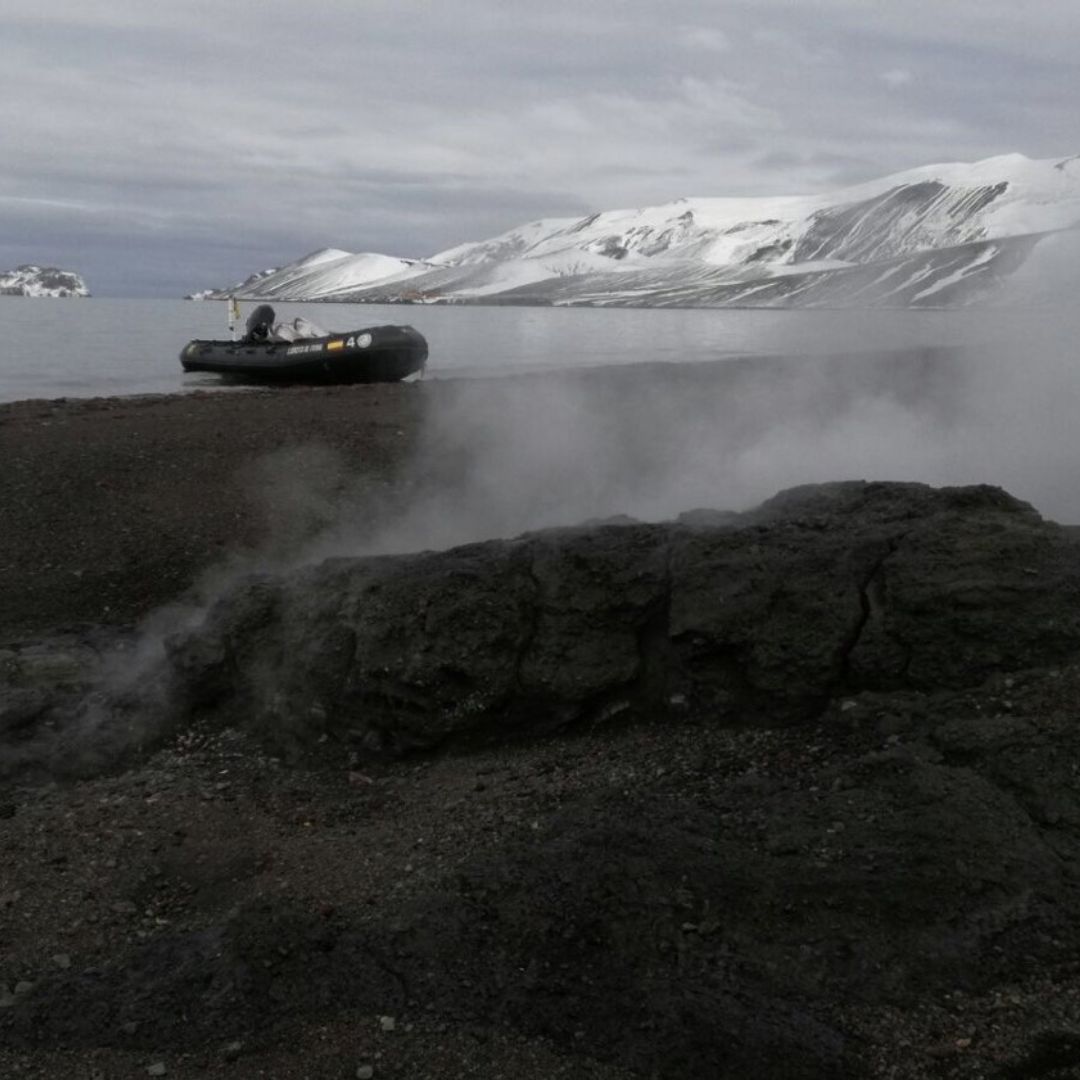
The destination was Deception Island, an almost circular volcanic caldera, where hydrodynamics are reduced and active volcanism releases naturally high concentrations of mercury. ‘The water inside the bay takes about two years to renew, but it is a hyperproductive area despite the high concentrations of mercury,’ he describes. This environment thus becomes a unique place to study biological adaptations to extreme pressures.
Getting there is part of the challenge in itself. ‘The crossing between South America and Deception can be quite violent, given the currents and tides.’ On some campaigns, the sea was so rough that ships rose almost vertically, making it impossible for the crew to stand upright.
Setting up a remote laboratory
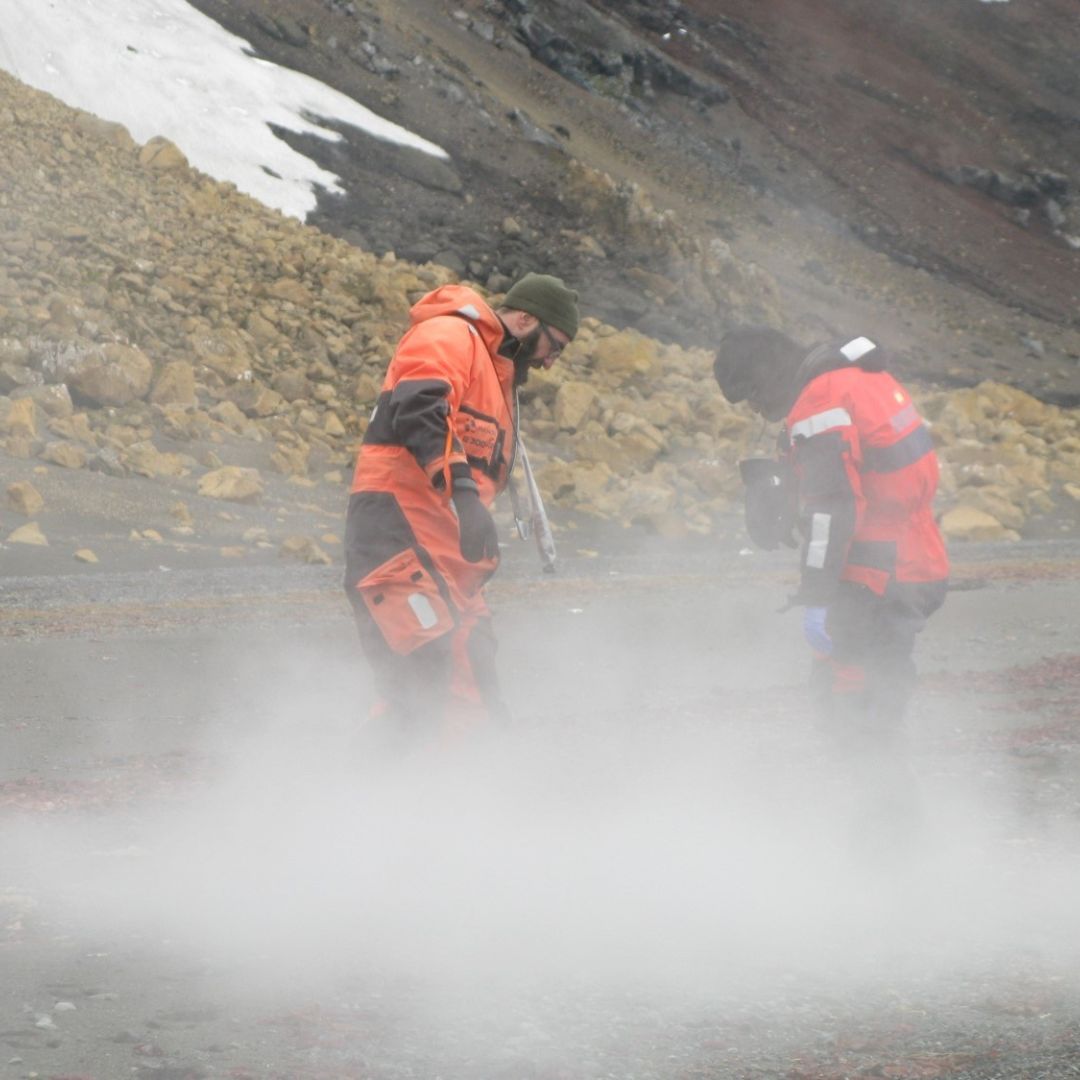
To carry out the planned work, the team needed laboratory equipment that is not available at most Antarctic bases. ‘We moved half of the laboratory to Cadiz to be shipped to Antarctica,’ recalls Bernardo. The laboratory was prepared on land and sent by boat: analytical equipment, centrifuges and other essential material. On land, at the southern tip of America, Carla Gameiro, a member of the field team, waited for a window of good weather so that the plane could take her to Deception.
Sample collection is very rigorous and follows strict procedures. In Antarctica, all teams must list each sample they intend to collect and justify its impact. Everything that could be collected was collected, and many of the samples are still awaiting more detailed analysis.
Expectations were low. ‘I suspected that our techniques would not be sensitive enough to find some of the compounds; I thought everything would be too diluted,’ reveals Bernardo Duarte. But what they found was exactly the opposite.
Human traces in a remote location
The initial results were surprising. ‘We found a huge variety of contaminants that we did not expect to find in that environment.’ Among the compounds identified were illicit drugs such as anabolic steroids; antineoplastic drugs associated with cancer treatments; biocides (including insecticides, nematicides and fungicides); plastic derivatives; detergents such as SDS (found in shampoos, toothpastes, shower gels and household products); PCBs and DDT, both persistent pollutants that have been banned for decades; and hydrocarbons.
None of this seemed compatible with one of the most remote places on Earth. But recent figures help to understand the origin of these compounds. ‘Tourism has increased enormously in that area,’ says the researcher. Data from the IAATO (International Association of Antarctica Tour Operators) show that visits to the region rose from around 6,000 in the early 1990s to approximately 118,000 in the 2024/2025 season, an increase of almost twentyfold in three decades.
It is in this presence that the answer to what was found lies. Even when there is some water treatment on board ships, ‘something always escapes’. Ships with hundreds of people on board for weeks produce domestic, chemical and pharmaceutical waste that is not fully treated. The same is true of some older scientific bases, whose treatment systems are unable to remove all modern compounds. And in a bay whose water is only renewed every two years, any molecule that enters has time to accumulate.
Environmental sentinels
The contaminants detected on Deception Island are not confined to the water. They affect the organisms that live there. ‘These pollutants affect the functioning of phytoplankton and trigger the proliferation of antibiotic resistance mechanisms in bacteria, induced by the presence of pollutants,’ explains the researcher. Changes in the functioning of phytoplankton communities, which are the first link in the food chain, can have important consequences for marine productivity.
But it is in bacteria that the most immediate response to the presence of contaminants occurs. Resistomes are ‘a set of genes associated with resistance to antibiotics and heavy metals’; they are a kind of environmental record that allows us to assess the impact of the presence of contaminants on organisms.
Bernardo found that in Fumarola Bay, where there have been natural mercury emissions for thousands of years, this pollutant is no longer a stress factor and adaptation is stable and predictable: ‘Mercury is no longer a new stress; bacteria in that area have been exposed to it for thousands of years,’ he explains. But near the Gabriel de Castilla Base, where anthropogenic contaminants have been detected, the bacteria reveal another type of signature: ‘We see resistances that are clearly human.’
Environmental sentinels
The contaminants detected on Deception Island are not confined to the water. They affect the organisms that live there. ‘These pollutants affect the functioning of phytoplankton and trigger the proliferation of antibiotic resistance mechanisms in bacteria, induced by the presence of pollutants,’ explains the researcher. Changes in the functioning of phytoplankton communities, which are the first link in the food chain, can have important consequences for marine productivity.
But it is in bacteria that the most immediate response to the presence of contaminants occurs. Resistomes are ‘a set of genes associated with resistance to antibiotics and heavy metals’; they are a kind of environmental record that allows us to assess the impact of the presence of contaminants on organisms.
Bernardo found that in Fumarola Bay, where there have been natural mercury emissions for thousands of years, this pollutant is no longer a stress factor and adaptation is stable and predictable: ‘Mercury is no longer a new stress; bacteria in that area have been exposed to it for thousands of years,’ he explains. But near the Gabriel de Castilla Base, where anthropogenic contaminants have been detected, the bacteria reveal another type of signature: ‘We see resistances that are clearly human.’
‘I would like to know if they are also there, but to do so, it would be necessary to collect and preserve the samples in a different way.’ At the time of the expedition in which he participated, there was still no access to methodologies and procedures that would allow these compounds to be detected.
Deception Island proved to be a mirror, exposing how natural and human pressures intersect in a fragile, sensitive and global ecosystem. For Bernardo Duarte, Antarctica ‘is a living laboratory’ and what happens there does not stay there. ‘We have to look at the poles as we look at the ecosystems close to us. Just because it is far away does not mean it does not concern us.’
Text by Vera Sequeira and Joana Cardoso
Photographs by Carla Gameiro