
Integrated approach needed for river basin management, argues Pedro Proença Cunha, from MARE
Opinion article by Pedro Proença Cunha, published in Expresso, highlights the need to integrate science, land use and policy in flood risk management.
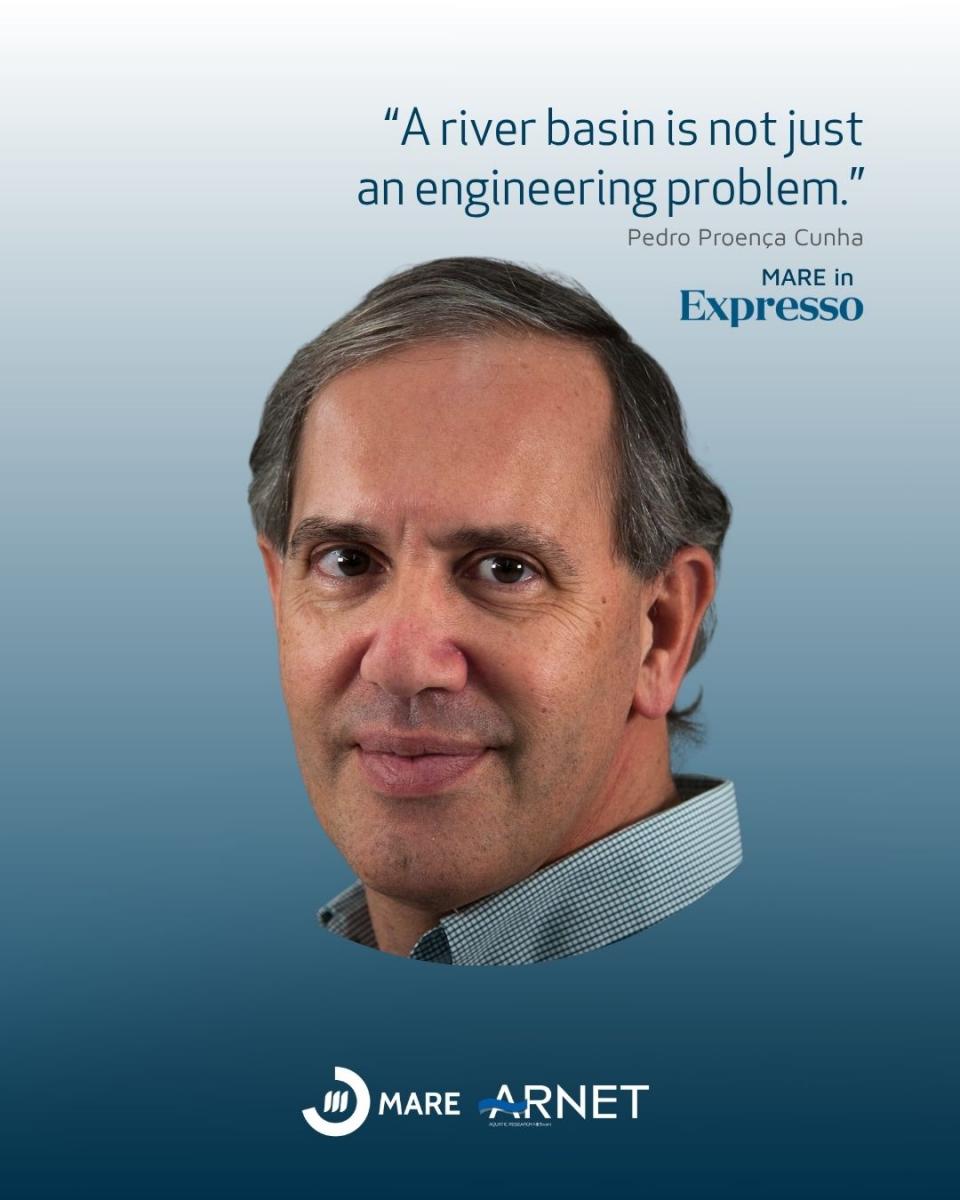
MARE/ARNET researcher and Full Professor at the Universidade de Coimbra, Pedro Proença Cunha, calls for a paradigm shift in river basin management, stressing the need for a truly integrated approach.
In an opinion article published in the newspaper Expresso, the author analyses the recent flooding events in the Mondego basin and questions the effectiveness of responses focused exclusively on hydraulic, sanitary and geotechnical engineering.
While acknowledging the importance of these fields, Pedro Proença Cunha argues that such a perspective is insufficient to capture the complexity of river systems, which result from the interaction between natural processes, land use, economic dynamics and political decisions.
“A river basin is not just an engineering problem. It is a complex system where natural processes, land use, economic dynamics and political decisions interact. To consider it solely from a hydraulic perspective is to reduce reality to an insufficient — and therefore risky — dimension”.
Pedro Proença Cunha also highlights that, over recent decades, several technical reports have been produced, largely focused on hydraulic aspects, without leading to a structural change in how these basins are analysed and managed. Given the recurrence of extreme events, he argues that it is time to rethink both the analytical framework and the proposed solutions.
One of the critical issues identified concerns the occupation of floodplains. Despite broad technical consensus that these areas should be reserved for uses compatible with the natural dynamics of rivers, urban development continues to take place, increasing vulnerability to flood risk.
The article reinforces the importance of Integrated Water Resources Management.
“Truly sustainable management requires integration. Geologists who understand river sediment dynamics, geographers who analyse landscape evolution, biologists who study fluvial ecosystems, environmental restoration specialists, agricultural and forestry engineers, urban planners and landscape architects all have a role to play. Equally important are local authorities and communities, who live with the consequences of these decisions,” he explains.
In this context, Pedro Proença Cunha advocates for the creation of permanent interdisciplinary groups, bringing together different fields of knowledge and involving policymakers and local communities.
According to the researcher, only an integrated approach will improve not only the quality of decisions but also the public debate around land and water management.
“If we want to reduce future risks, it is not enough to study what has happened. We need to change the way we think about territory.”
Text: Vera Sequeira
Front page image: IA
Profile image: © Academia das Ciências de Lisboa