
Blue Carbon in Portugal: MARE contributes to the development of the national forum
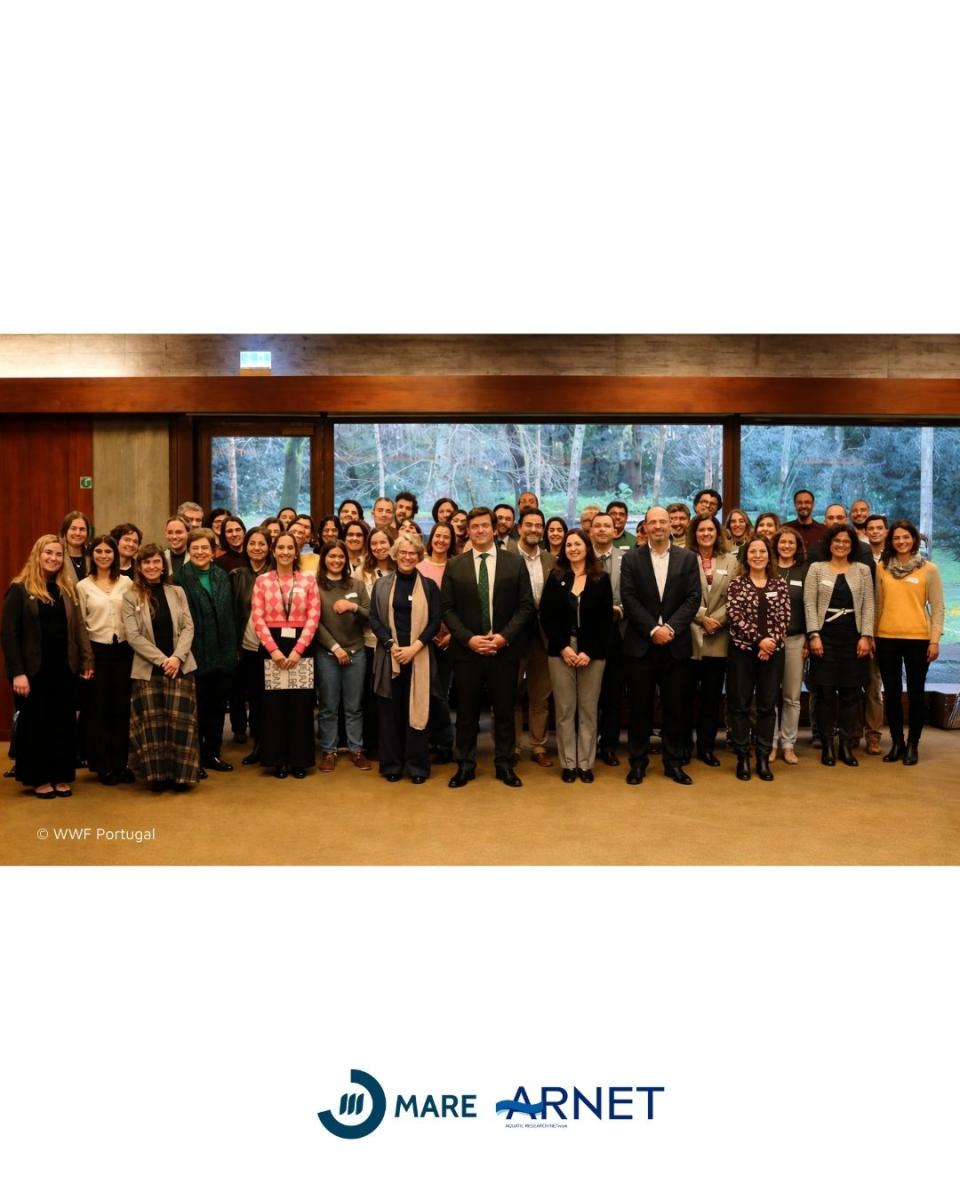
Researchers from MARE / ARNET took part in the second working session dedicated to the development of the National Blue Carbon Forum, held at the Fundação Calouste Gulbenkian in Lisbon, within the framework of the Gulbenkian Blue Carbon project.
MARE was represented by researchers Adelaide Ferreira, Helena Adão, Ricardo Melo, Lia Vasconcelos and João Franco, participating in a meeting that brought together representatives from academia, public institutions, civil society organisations and entities from the marine sector. The aim of the session was to co-construct a proposal for the governance and operational framework of a future national blue carbon platform.
The initiative was promoted by WWF Portugal, in collaboration with the Fundação Calouste Gulbenkian and BlueZ C, with the support of SeaForester and the Directorate General for Maritime Policy. The session combined moments of strategic framing, the sharing of institutional, scientific and civil society perspectives, as well as collaborative working spaces focused on defining the objectives, initial activities and operational model of the future National Blue Carbon Forum.
Throughout the meeting, participants contributed to deepening the discussion and consolidating a shared vision on the role of blue carbon in the national context.
The closing session was led by the Secretary of State for Fisheries and the Sea, Salvador Malheiro, who highlighted the importance of blue carbon for the future of marine policies and for addressing climate change, signalling the government’s willingness to move forward with the coordination of this forum.
The participation of MARE and ARNET researchers in this process reinforces the contribution of scientific knowledge to the establishment of a national framework for dialogue and coordination on blue carbon at a key moment for consolidating this topic within Portugal’s marine policies.
|
What is Blue Carbon? Blue carbon refers to the carbon captured and stored by marine and coastal ecosystems. It represents the amount of carbon dioxide removed from the atmosphere by these ecosystems, contributing to the reduction of greenhouse gas emissions. In Portugal, blue carbon ecosystems include salt marshes, seagrass meadows and macroalgae forests. In tropical regions, mangroves are also considered. |
Why is it important to conserve or restore these marine ecosystems? Marine and coastal ecosystems have a much higher capacity to capture and store carbon than terrestrial ecosystems, making them an effective nature based solution for climate change mitigation. Although they occupy relatively small areas, they sequester carbon at very high rates and retain it in sediments for long periods. Beyond their climate role, these ecosystems contribute to coastal protection, water quality and biodiversity conservation, and are also essential for climate change adaptation. |
Text: Vera Sequeira