
MARE | ARNET Director comments on flooding in TSF press review
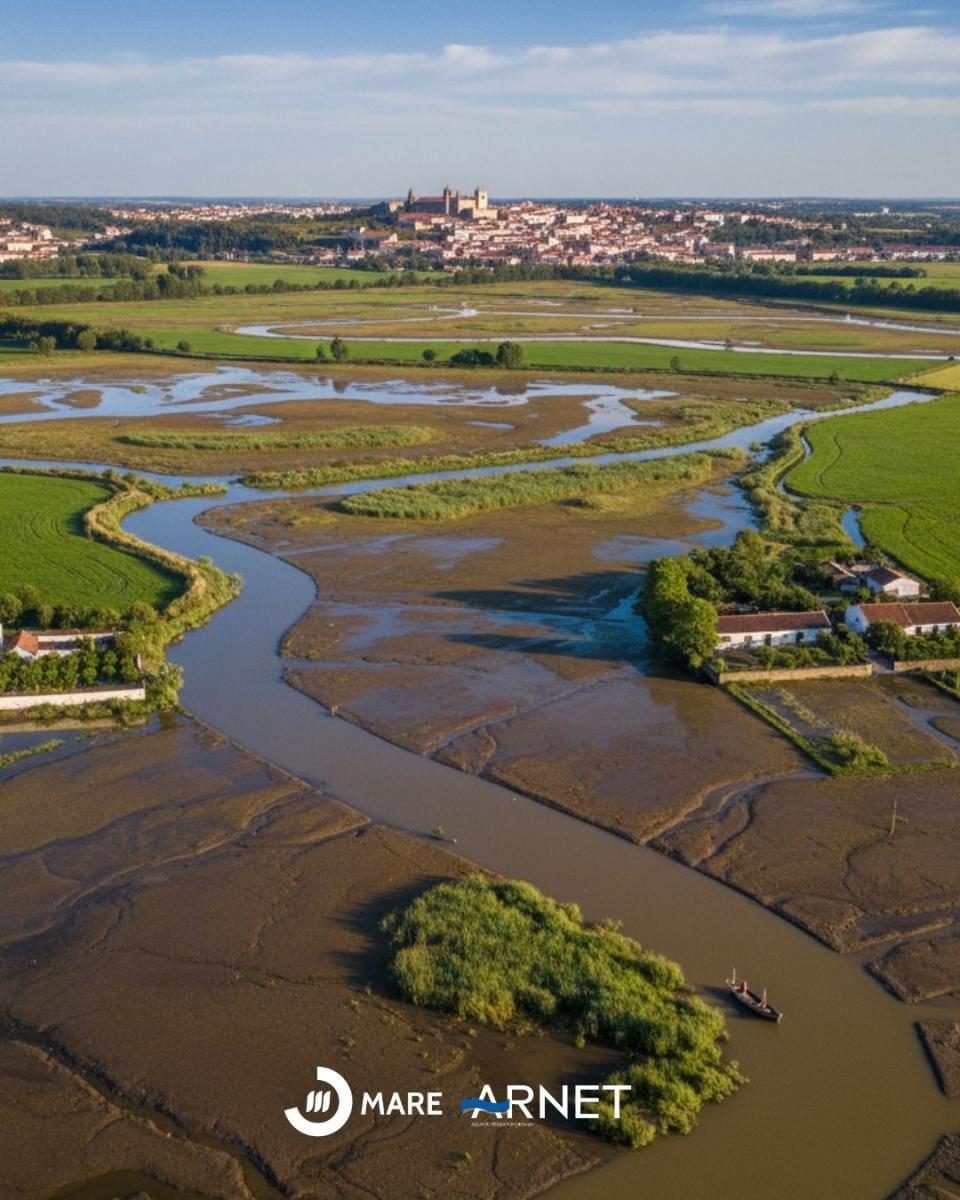
Recent floods and damage caused by severe weather were highlighted in the TSF press review, featuring Pedro Raposo de Almeida, Director of and MARE and ARNET – Aquatic Research Network.
When explaining his choice of news items, the researcher stressed that such phenomena are part of our collective history, yet we tend to forget them. “We have to learn to live with nature,” he stated, warning against the idea that technological progress gives us the illusion that everything can be controlled.
In his view, the issue is not limited to rainfall intensity or river flow. It also lies in the way we occupy the territory and in how prepared we are to deal with adverse situations. He defended the need for contingency plans, simulation exercises, and better public preparation so that people know how to act.
Spatial planning and community preparedness
During the interview, Pedro Raposo de Almeida recalled that “the river has a minor bed and then it has the flood bed” and that it periodically needs to occupy that additional space. Over several years, the reduced frequency of smaller floods contributed to a false sense of security.
While acknowledging the role of hydraulic infrastructures, he was clear about their limits: “We can delay with dams, but we cannot prevent, especially, large floods.”
He argued that spatial planning should have removed people from risk areas long ago and stressed the importance of preparing communities to respond to extreme events.
Lamprey: plenty of water, little fish
At the end of the conversation, the lamprey season shifted the discussion towards population status and fishing activity.
Pedro Raposo de Almeida explained that, if populations were healthy, years with high river discharge could even be advantageous. However, the current situation is different: “We have plenty of water, but little fish.”
He also recalled that lampreys have a long-life cycle, around 7 years, which means recovery cannot be accelerated when populations are weakened.
The intervention on TSF reinforced the idea that extreme natural events are part of the dynamics of river and coastal systems, but the way territory is managed and communities are prepared makes a decisive difference in how these events are experienced.
Listen to the episode here
Text: Vera Sequeira