
Where the ocean breathes: what is changing in Antarctic phytoplankton
From the Portuguese coast to polar waters, the Phytoplankton and Remote Sensing group studies the changes taking place at the base of the food chain, highlighting impacts that extend across the entire ocean. 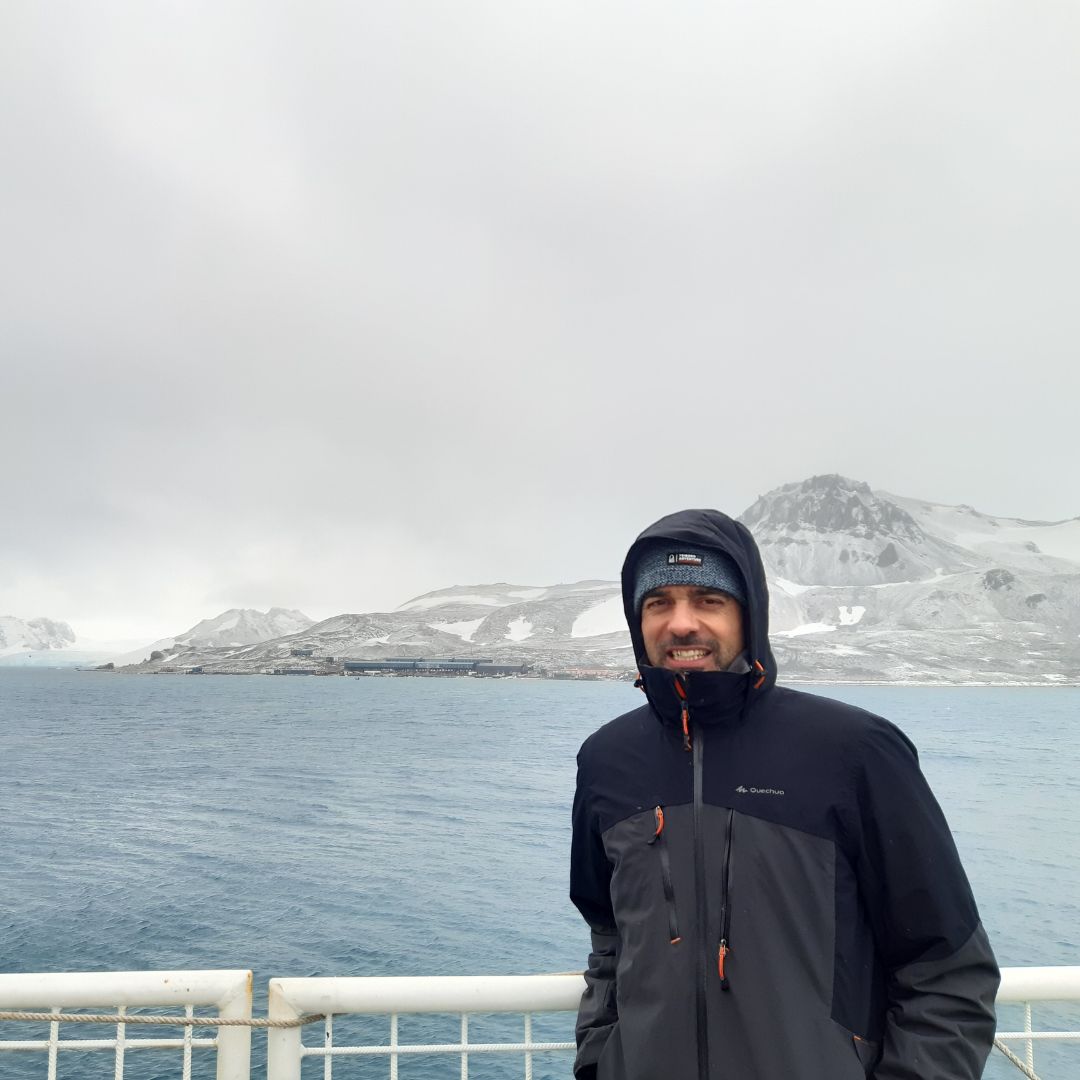
The Antarctic adventure began in 2008, when Carlos Rafael Mendes started his PhD. He wanted to compare the processes associated with phytoplankton growth on the Portuguese coast and on the frozen continent. In a collaboration between MARE at ULisboa and FURG - Federal University of Rio Grande, Brazil, he collected samples at the study sites and returned to Lisbon with them in his suitcase. Since that trip, he has been there 15 times, enough to see how the region has changed.
Since then, the Phytoplankton and Remote Sensing group at MARE in Ciências ULisboa has gained experience and knowledge by analysing phytoplankton and ocean colour on the Portuguese coast, complementing the analysis of samples collected at sea with satellite images, skills that Afonso Ferreira took to Antarctica in 2017 when he participated in his first expedition. But Antarctica has challenges that do not exist in temperate latitudes. ‘During the southern winter, there is no light, so there is no satellite. And even in the other months, it is a difficult region: for satellite images, you need a clear sky,’ explains Vanda Brotas, coordinator of the research group.
But Afonso Ferreira did not go alone. He took Catarina Guerreiro with him, who was used to working in the tropics but wanted to understand the influence of desert dust in the Southern Ocean region: ‘I went to learn, I went to expand my area of research, but also to build bridges between my research topic and a new environment.’
This year, another researcher joined the adventure. Graça Sofia Nunes wanted to better understand phytoplankton blooms and how abiotic factors influence them in a new area of study in Antarctica: the Ross Sea.
The journey
Polar logistics begin long before you see ice. Catarina Guerreiro recalls the preparations with enthusiasm: the mandatory training, the weeks of planning and the anticipation of the first campaign. She spent New Year's Eve in Punta Arenas and, the next day, boarded the Brazilian ship Maximiano. ‘All the preparations were brutal. It was the biggest embarkation of my life. It was 39 days at sea,’ she says.
The crossing included regions that are iconic for those who study the ocean. ‘There are meridians and latitudes that are special: crossing the Equator, passing the Polar Front, are climatic and oceanographic boundaries, which also mark differences in navigation,’ she explains. When crossing the Drake Passage, a place feared by all, even with rough seas, she stayed awake so as not to ‘miss the moment.’
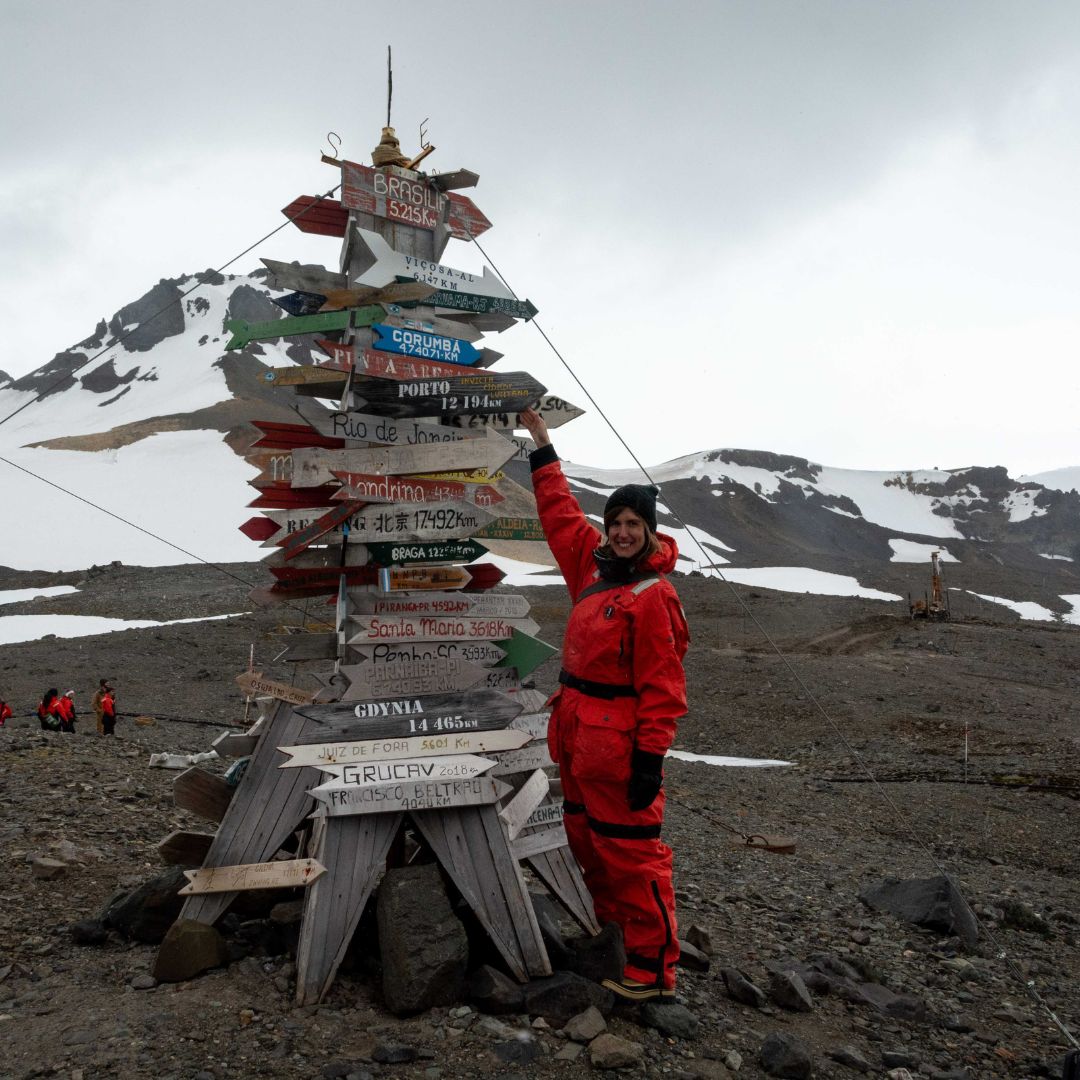
The arrival on the continent is difficult to describe. Afonso Ferreira recalls that ‘it is a completely alien landscape’, which was the moment that most impressed him the first time. In 2020, he experienced a particularly unexpected episode: "We were there when the atmospheric temperature record for that region was set. It was 18 degrees. We were walking around in T-shirts in a place where it is normally 1 or 2 degrees. The landscape was completely different from the previous year.”
Over the years, Carlos Rafael Mendes has seen the region transform. “There are areas where we can now pass by ship that we couldn’t 20 years ago because there were ice platforms. It is visible to the naked eye: much less ice, much fewer icebergs.”
Catarina Guerreiro adds that Antarctica is anything but uninhabited. “We crossed paths with several tourist ships. Despite being the most remote place I have ever been, every now and then one would pass by. This made me realise that Antarctica is already more visited than it used to be, and more than it should be.”
Priceless samples
Collecting phytoplankton samples in Antarctica is not very different from what is done elsewhere. It all starts on deck, with the CTD rosette system, a metal structure with Niskin bottles and sensors that measure temperature, salinity and oxygen. ‘The equipment descends slowly to the depths we want and we monitor the sensor values in real time to identify the maximum chlorophyll peak,’ explains Catarina Guerreiro. When this peak occurs, the team asks to stop the equipment and closes a bottle at a distance, repeating the process at various depths.
Back on deck, the samples from each bottle are collected and, in the ship's wet lab, the water is placed in a vacuum filtration system. The microalgae remain in the filters, which are carefully cleaned and dried before being observed under a microscope or undergoing biochemical analysis. The entire process must be precise and quick, because each sample represents a rare combination of time, place and conditions. ‘Each sample we collect under these conditions is priceless, because it requires a complex combination of ship, equipment and logistics that we do not have in Portugal,’ he says.
A changing ecosystem
Carlos Rafael Mendes' work has revealed one of the most striking changes in the Antarctic food web: "The main result of my PhD and my studies so far is a change in the composition of microalgae. Diatoms, typical of Antarctic ecosystems, are being partially replaced by cryptophytes in several regions, especially coastal ones." These results were later published in the prestigious scientific journal Global Change Biology.
The consequences are serious. ‘The first trophic level in Antarctica is composed of diatoms, which directly feed krill, which in turn feed seals, seabirds and whales. If the amount of diatoms decreases, krill will have no food and we will not have enough biomass to feed all the other organisms in the food chain.’
Afonso Ferreira observed complementary changes through satellite data, which he published in Nature Communications. "I detected changes on a larger scale. I was able to observe that phytoplankton is growing for longer. In Antarctica, phytoplankton only grows in the southern summer, when there is light, but due to melting ice, we are seeing less ice in spring and autumn, and phytoplankton is able to grow beyond the summer.” But what appears to be a positive result is not. ‘When this biomass increases at the end of summer, it no longer coincides with the presence of whales and seals in the region, as they have already begun their migrations by then,’ explains Carlos Rafael.
Graça Sofia Nunes' work reinforces this trend and adds new dimensions to what is known about the region. In her latest article published in the journal Communications Earth & Environment (Nature Portfolio), the young researcher analysed time series of chlorophyll a in the Ross Sea and identified changes consistent with Afonso Ferreira's results. ‘Phytoplankton blooms are starting earlier and ending later. Their duration is really changing.’ The researcher emphasises that the next step will be to separate distinct groups of phytoplankton using remote sensing data, which will help to better understand these changes. Catarina Guerreiro's research adds an essential piece to this puzzle: coccolithophores, microalgae that form a calcium carbonate shell and have existed for about 220 million years, typically in warmer, nutrient-poor waters. In the most recent samples, Catarina found very well-preserved coccolithophores south of the Polar Front, a surprise she had not expected. This result may indicate that warmer, nutrient-poor water masses are advancing towards polar latitudes, but the researcher refuses to jump to conclusions: "We don't know yet. We'll see. We need to explore the results from a multidisciplinary perspective. We need to compare the ecological data with the physical and chemical data to support a hypothesis like this." 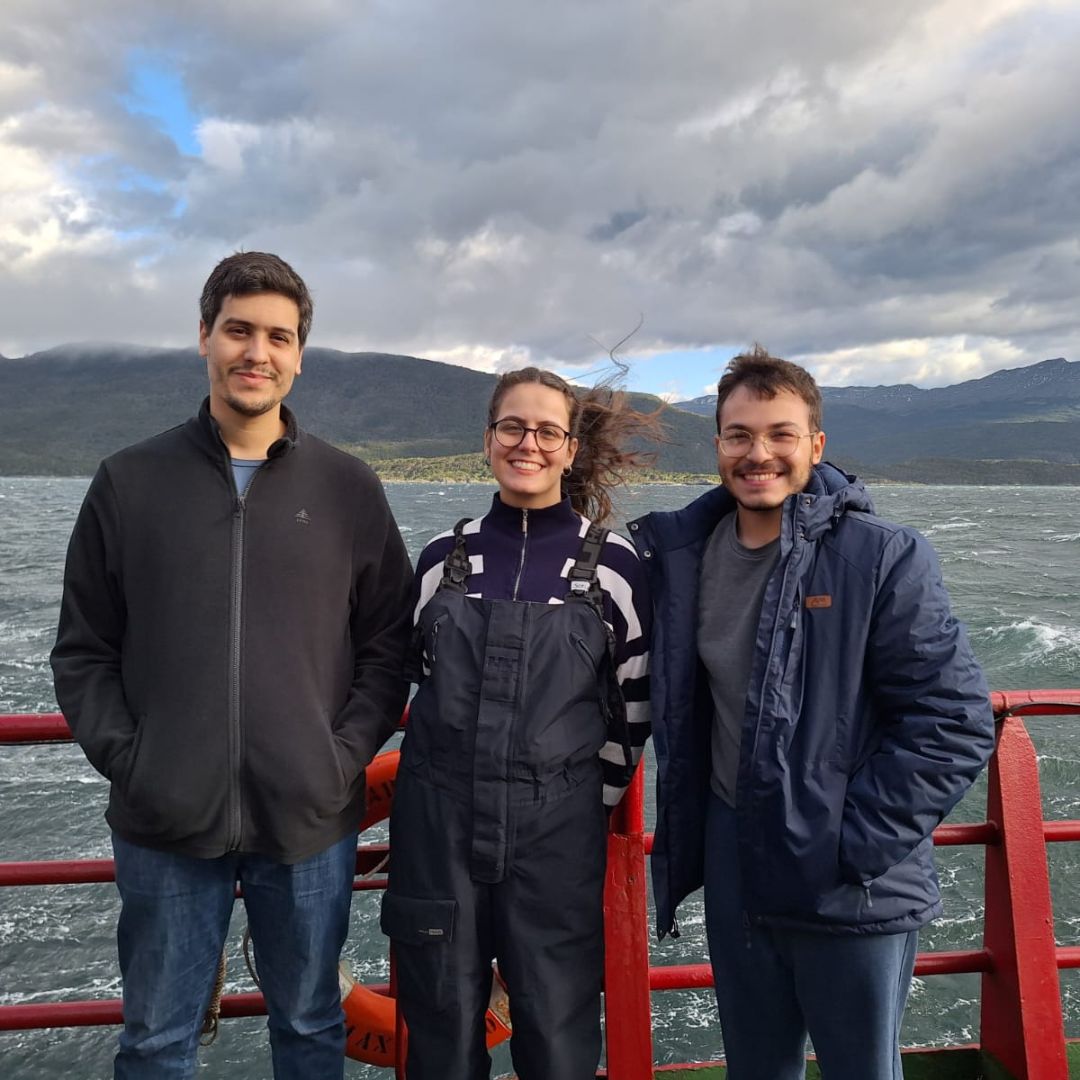
On the crest of the wave
The evolution of the group's work has been accompanied by the emergence of new tools that allow phytoplankton to be observed in greater detail, such as the PACE satellite, recently launched by NASA. ‘We now have tools that we didn't have a few years ago, such as the PACE satellite,’ explains Vanda Brotas, pointing out that the team is ‘riding the wave’ in the use of this technology. But taking advantage of these tools requires hybrid and highly specialised skills. "You need to understand biology to know about phytoplankton and have computational skills to analyse satellite images. It is the integration of these areas that makes the difference," stresses the professor and researcher.
Ana Brito adds that working with PACE is an opportunity, but also a demanding challenge that requires investment and time. "Being at the forefront means having funding at the right time, not only for people, but also to develop products. PACE brings new tools, but there is still a lot of work to be done to be able to use them the way we want," she says. For the researcher, consolidating this specialisation requires continuous training and teams prepared to deal with technology that is still in its infancy.
A transformative journey
Antarctica is not just a place of work. It is a place that gets under your skin. Catarina Guerreiro admits this without hesitation: ‘It took me months to adapt when I came back. I really had a kind of hangover.’ For Afonso Ferreira, one of the moments that stuck in his memory was seeing his first iceberg. “When I saw my first iceberg, it was something else,” he recalls, with a mixture of amazement and disarmament at the scale of the continent. Ana Brito has not yet been to Antarctica, but she imagines the day when she will finally set foot there: “I want to feel that cold air and the connection with the surrounding environment.” Carlos Rafael Mendes describes Antarctica as an inexhaustible territory of discovery: ‘Antarctica is an open laboratory. Each expedition answers one question and raises many others.’ Graça Sofia Nunes agrees and adds that ‘it is a question full of unanswered questions.’
Ana Brito leaves a final message that echoes among all her colleagues: ‘Antarctica is a vulnerable and fragile system, in direct contact with all terrestrial systems and the global ocean. It is important that we look after it and the rest of the planet. Everything we do has an impact elsewhere.’
Written by Vera Sequeira and Joana Cardoso
Photographs by (in order): Carlos Rafael Marques, Catarina Guerreiro (and cover photo), and Afonso Ferreira