
Jaime Ramos in 90 seconds of science – The Role of Wetlands in the Conservation of the Kentish Plover
In the latest episode of the programme 90 Segundos de Ciência (90 Seconds of Science), broadcast by Antena 1 on 10 December, researcher Jaime Ramos discussed the impact of wetlands on the life cycle of the Kentish plover, a bird that breeds on the beaches and coastal areas of Portugal and the Atlantic. 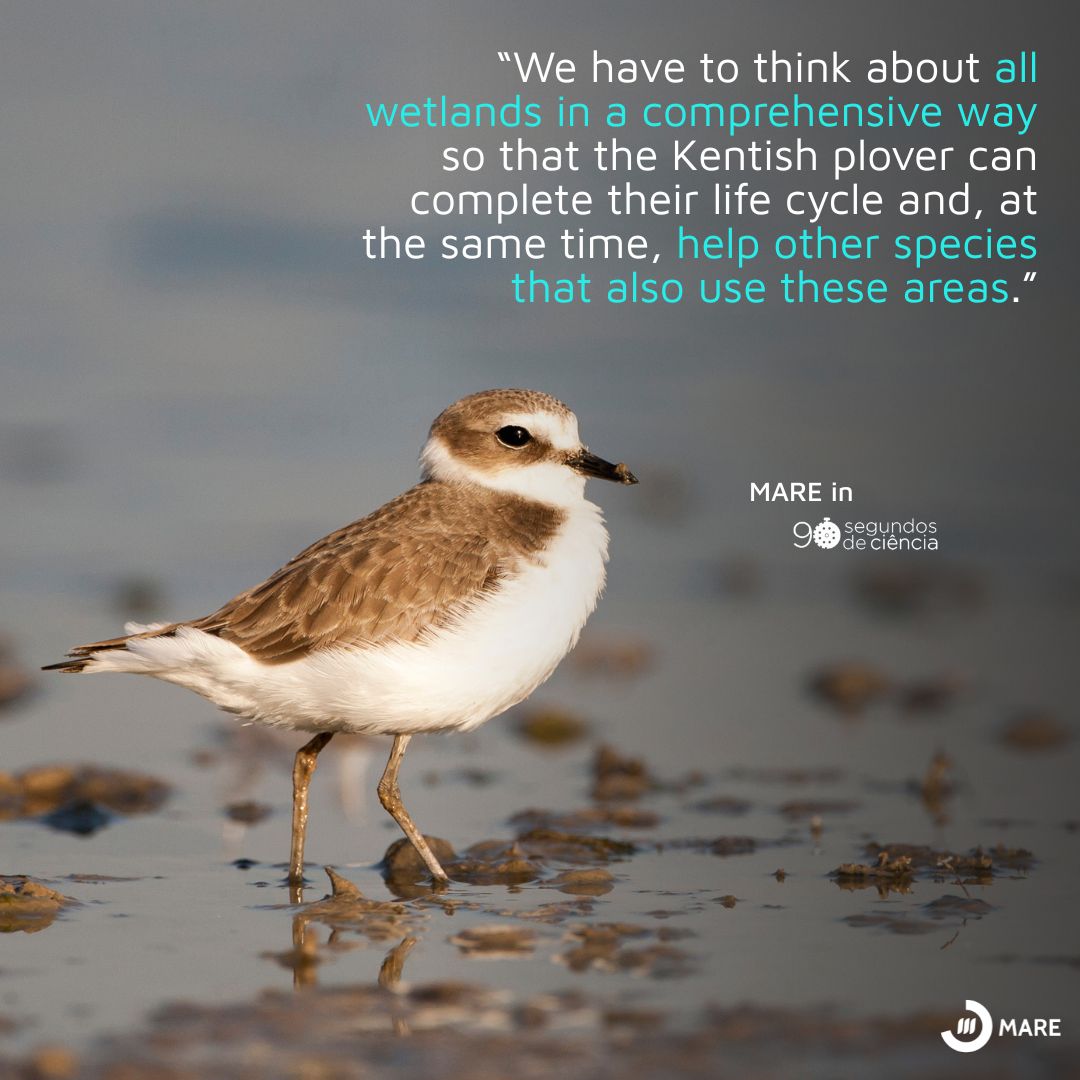
The Kentish plover is one of the few species that uses wetlands to breed, making it an ‘umbrella’ species for the preservation of these ecosystems. The researcher explained that by protecting the plover's habitats, we are also ensuring the protection of other species that share the same environment, such as the little tern, as well as various species of insects and plants.
Jaime Ramos pointed out that human disturbance on beaches, especially in summer, is one of the main threats to the reproduction of the Kentish plover, as increased traffic and the presence of tourists can cause birds to abandon their nests.
In addition to the pressure caused by human activity, the study also looks at the effects of climate change, namely coastal erosion and sea level rise, which directly affect the species' breeding areas. According to the researcher, a careful analysis of beaches is needed to identify those that are disappearing and could serve as new habitats for birds.
Monitoring data for this species indicate that plovers breed on beaches in the central region, use the Mondego estuary for feeding, and may winter in the salt pans of Vila Real de Santo António and the Castro Marim area.
According to the researcher, ‘this data indicates that we need to think about all wetlands in a comprehensive way, so that sandpipers can complete their life cycle and, at the same time, help other species that also use these areas.’
To listen to the episode, click HERE
Written by Patrícia Carvalho