
Floods may support lamprey recovery and ease pressure on fisheries
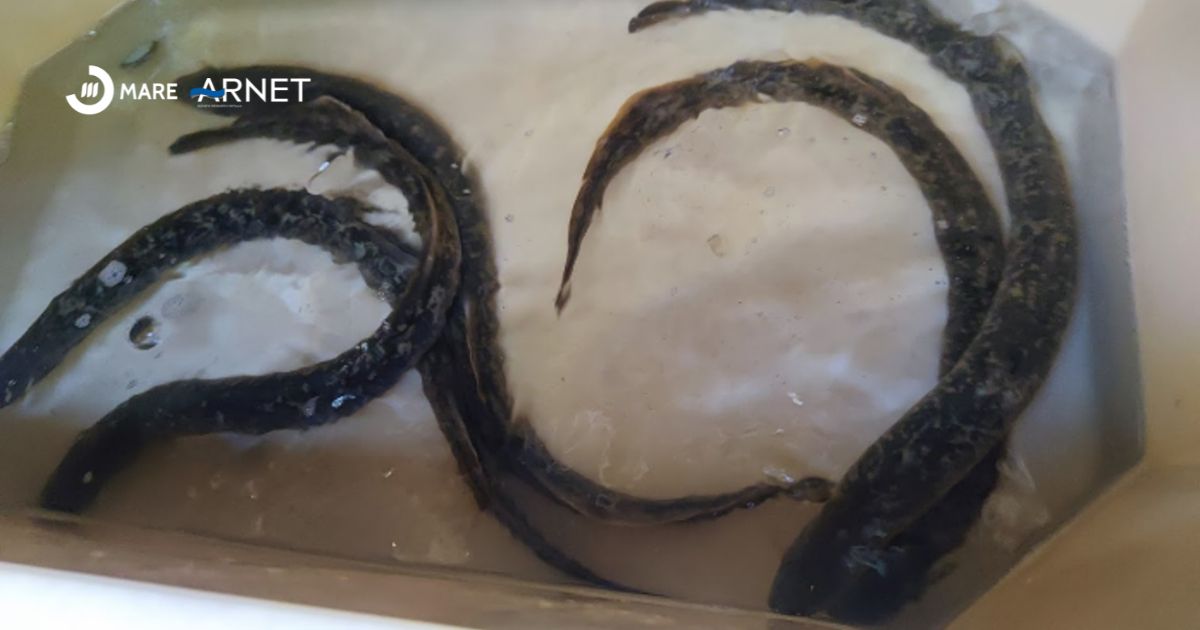
Recent floods in several Portuguese rivers may have an unexpected positive effect on the population dynamics of the sea lamprey (Petromyzon marinus), a species of high ecological, cultural, and economic value.
Despite the impacts of extreme weather, increased river flow and turbidity can act as a stimulus for migration, facilitating upstream movement of this species from the sea to spawning grounds. These conditions enhance river connectivity and create more suitable environments for reproduction and larval development.
“I hope that with this situation of floods and generous flows in most rivers, a greater number of animals have been able to reach further upstream, to spawning areas, and that, by spawning, we will then have a very favourable period for larval growth,” says Pedro Raposo de Almeida, Director of MARE | ARNET and Professor at the University of Évora, in an interview to portuguese newspaper Jornal de Notícias.
Severe weather also had an indirect effect on fisheries, within a context where resource management has been supported by the Lamprey and Shad Monitoring Commission, created by the Portuguese Government in 2025, of which Pedro Raposo de Almeida is a member. Following adverse weather conditions, exceptional measures were adopted, including adjustments to the fishing calendar to compensate for periods of inactivity, such as extending the fishing season in several Portuguese rivers. The temporary interruption of fishing activity effectively acted as a “natural closed season”, allowing more individuals to reach spawning areas without fishing pressure. “Nature has, in practice, already done the stop that we should have done in terms of protecting the resource,” the researcher states.
After a disastrous 2025 season, the current fishing season is already showing signs of improvement, with strong demand pushing prices to around €100 per individual. This growing optimism has been accompanied by increased ecological awareness, with fishermen from rivers such as the Lima and the Cávado choosing not to request an extension of the fishing season, in a deliberate effort to allow lamprey to reproduce and ensure the future abundance and sustainability of this valuable resource.
However, this situation should be interpreted with caution. Lamprey populations have declined significantly in recent decades due to factors such as climate change, pollution, and migration barriers. Recovery will necessarily be slow, given the species’ life cycle and the need for favourable conditions over several years.
This case highlights the complexity of river systems, where extreme events can play an important role in ecological renewal. For MARE | ARNET, understanding these dynamics is essential to support sustainable management strategies that balance conservation, economic activity, and adaptation to environmental change.
Texto: Vera Sequeira
Imagens: Grupo de Investigação "FBCM - Biologia, Conservação e Gestão de Peixes", MARE - Universidade de Évora