
José Carlos Ferreira brings scientific clarity to national debate following recent storms in Portugal
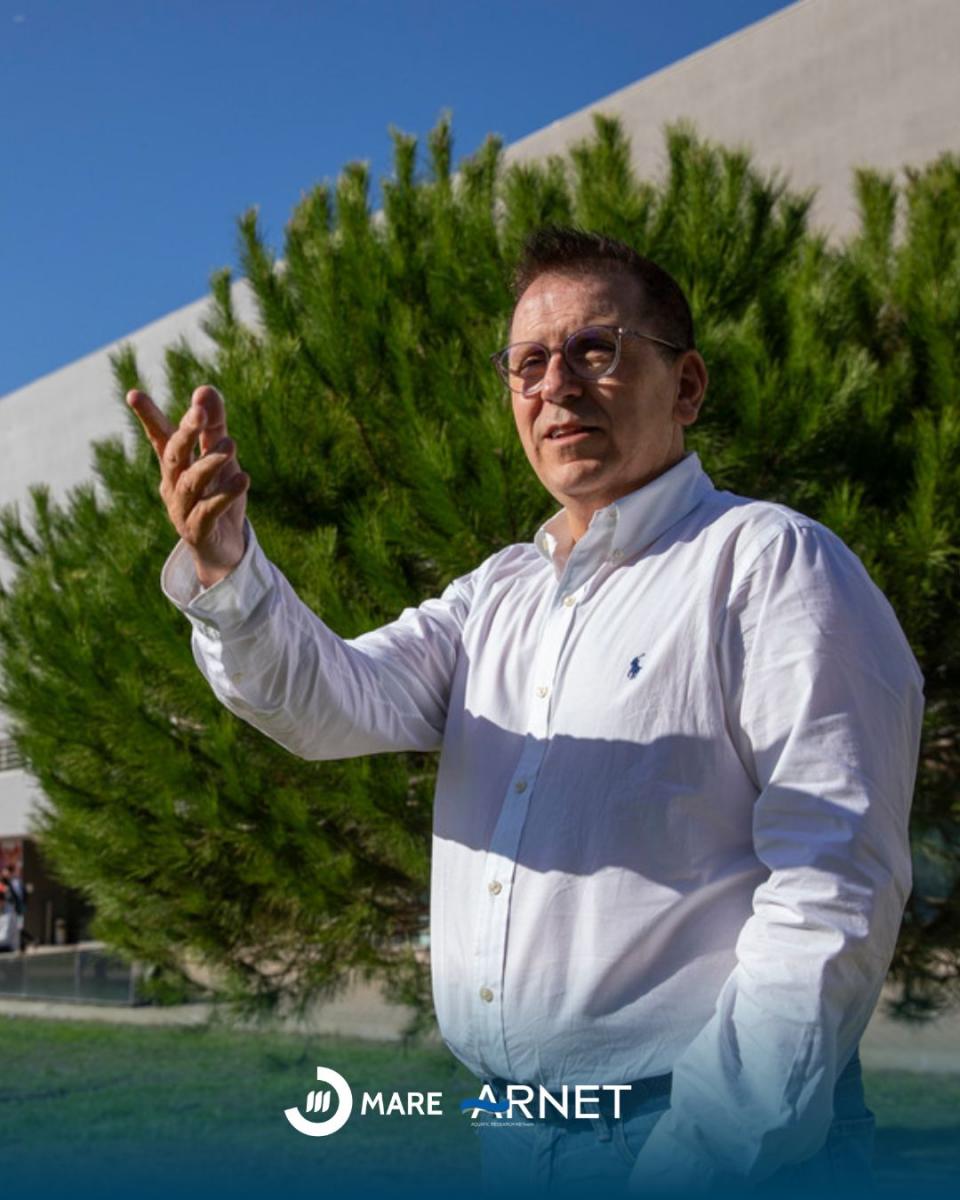
Following the recent storm events that affected several regions of Portugal, José Carlos Ferreira, MARE researcher and Professor at NOVA FCT, was invited to contribute to national discussions across more than a dozen television, radio, and press outlets. His repeated presence in national media reflects both the urgency of the situation and the growing recognition of scientific expertise in understanding extreme weather impacts on coastal and riverine systems.
Across interviews, José Carlos Ferreira emphasised that the recent impacts, including landslides, flooding, and accelerated coastal erosion, are not isolated incidents, but manifestations of structural territorial vulnerabilities and lagging land-use management. He argued that territorial governance should be water-centric, noting that “river basins are the ideal unit for territorial planning and should form the basis of land management, because water shapes the entire landscape,” stated the expert in sustainable urbanism and territorial management.
He also highlighted the absence of a continuous governance model linking upstream and downstream systems, explaining that “there is no tradition of managing water from its source to its mouth. This is a methodology that academia is trying to implement together with public authorities, through a ‘source-to-sea’ approach.” According to the researcher, fragmented territorial management increases exposure to risk, particularly in areas already under pressure from urbanisation and coastal occupation: “we cannot continue to manage river basins in a fragmented way, whether nationally or internationally.”
In addition to explaining the geomorphological processes behind landslides and coastal retreat, José Carlos Ferreira translated complex scientific and technical knowledge into clear and accessible messages for the public. He underscored the need for coordinated technical and planning responses, stressing that “the next phase needs rigorous engineering to properly dimension these systems, alongside territorial planning and risk management: the two must go hand in hand.” His interventions also reinforced evidence that climate change is intensifying natural processes, exacerbating erosion and increasing the frequency of extreme events.
By clarifying the links between hydro-geomorphological dynamics, land occupation patterns, governance structures, and risk management, José Carlos Ferreira contributed to a broader understanding of how science informs civil protection, territorial planning, and long-term climate adaptation strategies. His message was clear: resilience requires structural change, and proactive planning is far more cost-effective than reactive recovery.
MARE researchers’ engagement in the public sphere reflects our mission to bridge research, policy, and society - ensuring that scientific evidence supports informed decision-making in moments of environmental stress.
Text: João Pequeno
Featured interviews [Portuguese only]:
Tempestade em Portugal - Análise. SIC Notícias
Não são só os deslizamentos de terra, também a "erosão costeira está a afetar o país". Na Costa da Caparica "parte das dunas já desapareceram". CNN Portugal
"Vamos levar muitos anos a recuperar": especialista aponta falhas estruturais no Mondego. SIC Notícias
Cheias em Coimbra - Análise. SIC Notícias
Nova rutura de dique do Mondego aumenta risco de cheias. CNN Portugal
País devastado. Como dar a volta? SIC Notícias
Efeitos das tempestades - erosão costeira agravada. RTP Notícias.
Estragos provocados pelo mau tempo. SIC Notícias
Deslizamento de terras na Costa da Caparica. Antena 1
Arribas “mexeram-se” em Almada, mas o problema continuará mesmo quando a chuva parar. Público
Em Porto Brandão, movimentos de terrenos estão “activos” e fizeram sair 500 pessoas. Público
Praias desaparecem em poucos dias: em Mira a costa recuou sete metros. Expresso