
Participatory science and ecosystem health projects at the National Forum of Ciência Viva Clubs in Schools

MARE – Marine and Environmental Sciences Centre took part in the National Forum of Ciência Viva Clubs in Schools, held on 27 March at CNEMA – the National Centre for Exhibitions and Agricultural Markets, in Santarém. The event, organised by the Ciência Viva Agency, brought together around 1,400 participants, including pupils, teachers, researchers, entrepreneurs and citizens interested in science and technology.
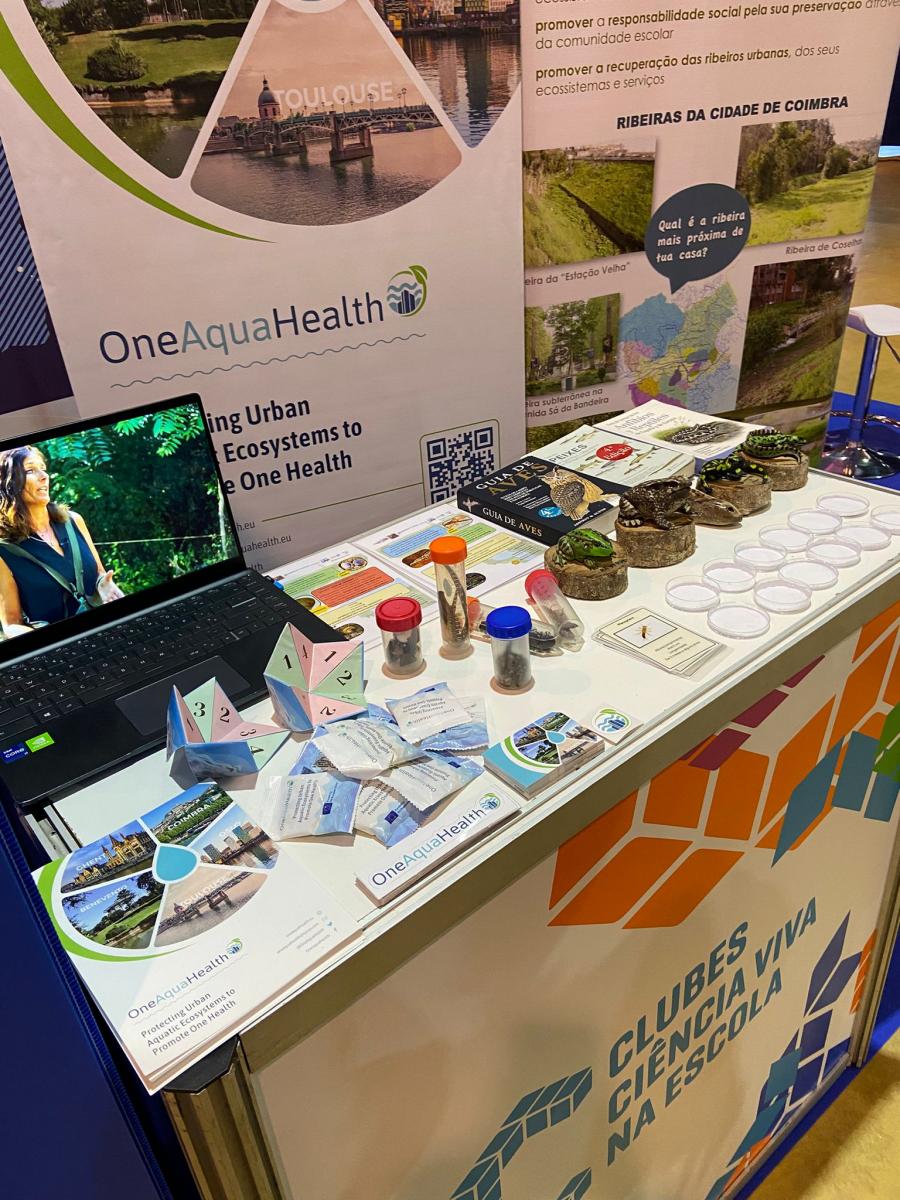
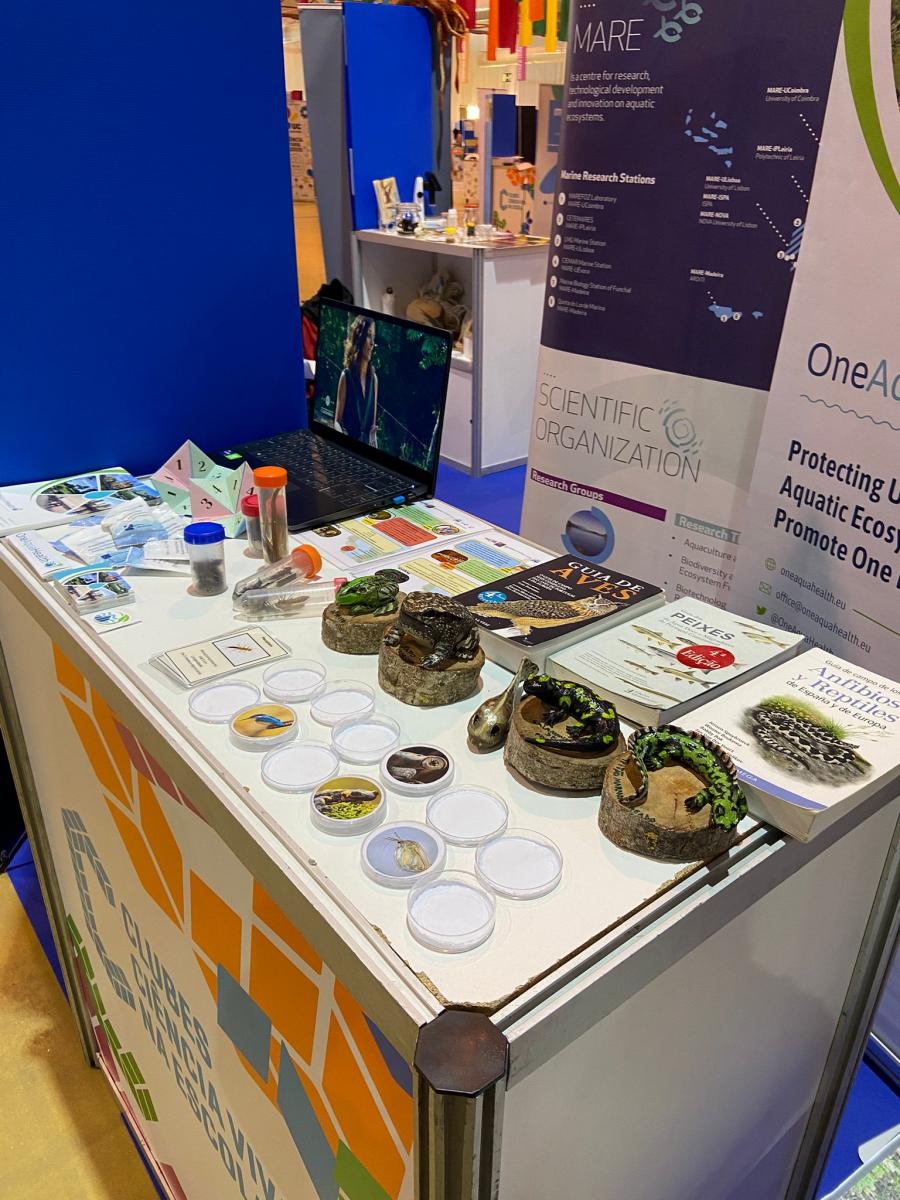
MARE’s participation was led by the Freshwater Ecology Research Group of MARE University of Coimbra, coordinated by researcher Maria João Feio. The team present at the Science and Technology Exhibition — Andreina Zerega, Pieter van der Linden and Gabriel Silva — ran activities and presented two projects that reflect MARE’s commitment to environmental literacy, participatory science and applied research for the management of aquatic ecosystems.
CresceRio: bringing children closer to Coimbra’s urban streams
Among the projects showcased was CresceRio, an initiative developed by MARE in partnership with Marionet, which since 2018 has been bringing school communities closer to the aquatic ecosystems of the city of Coimbra. The project includes field trips, laboratory activities and the creation of a final performance, enabling children and young people to explore urban streams, understand their role in the functioning of the city and develop ecological and civic awareness. The artistic dimension of CresceRio enhances pupils’ creative expression, allowing them to transform scientific knowledge into narratives and performances that make learning more engaging and memorable.
OneAquaHealth: nature‑based solutions for healthier cities
The group also presented OneAquaHealth, a project that addresses the challenges posed by increasing urbanisation to freshwater ecosystems and human health. The project is developing a toolkit that integrates nature‑based solutions to restore and maintain the health of aquatic ecosystems, and, consequently, human, animal and plant health, across different scenarios, including those associated with climate change. The initiative highlights the importance of linking ecological science, urban planning and community well‑being.
The Forum’s organisers highlighted the contribution of the more than 150 institutions present, noting that the success of the event was due to the commitment and engagement of the participating teams. MARE’s participation was recognised as inspiring and valuable for the educational community, reinforcing the centre’s role in promoting science and strengthening the connection between research and society.
With this participation, MARE continues to strengthen the link between science, education and the wider community, emphasising the importance of aquatic ecosystems and encouraging younger generations to engage with research and sustainability.
Text by Zara Teixeira