
Science, ocean and career opportunities in the spotlight at Dia do Mar em Ciências
At Dia do Mar organised by the Faculty of Sciences of the University of Lisbon, MARE/ARNET was involved through the participation of several researchers and professors.
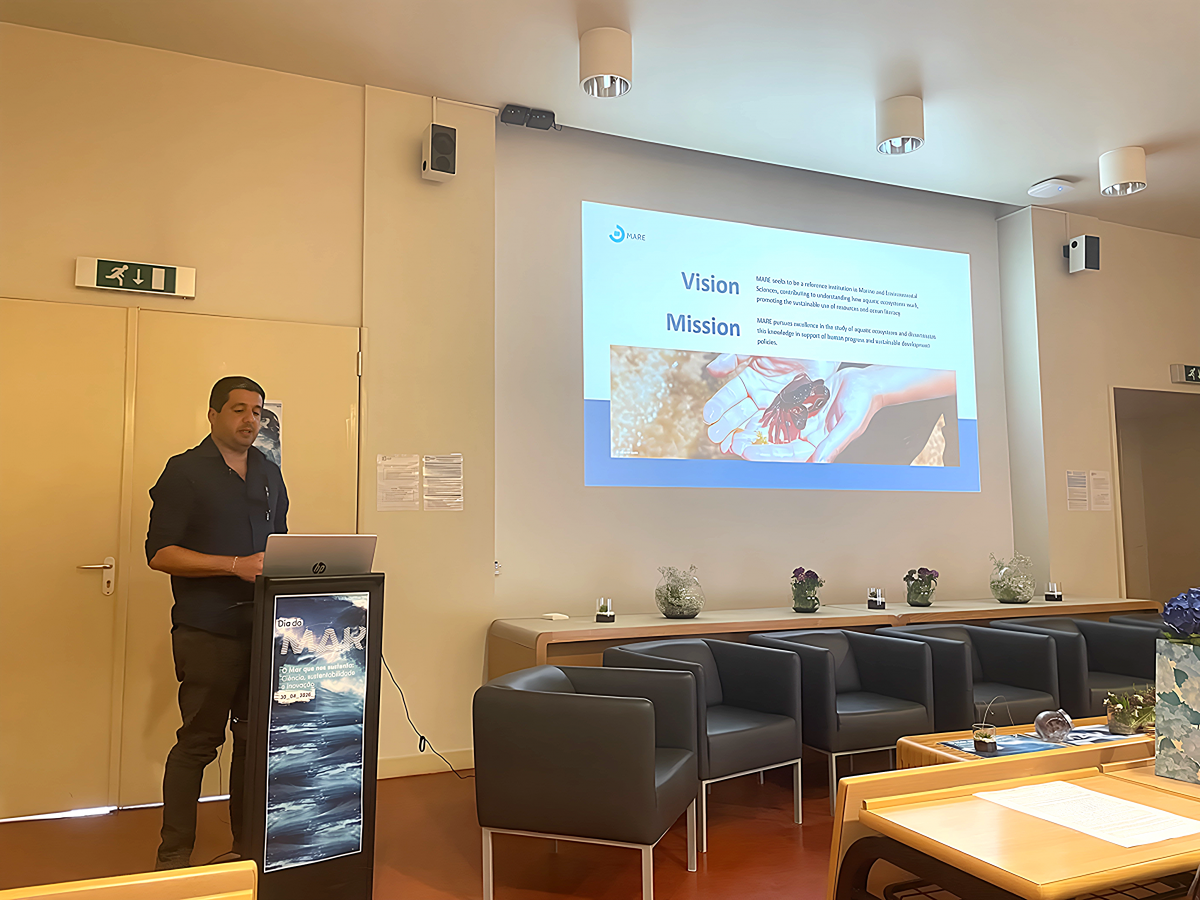
On 30th April, the Faculty of Sciences of the University of Lisbon (CIÊNCIAS ULisboa) hosted the 2026 Dia do Mar, an event that brought together scientific research, advanced training and the business community around the ocean. Under the theme "The sea that sustains us: science, sustainability and innovation", the programme gathered 97 participants, including master's and doctoral students, academics, researchers and representatives from a wide range of institutions and companies in the sector.
The 2026 edition marked a turning point from previous years: the event opened up to the entire CIÊNCIAS ULisboa community with training programmes, research or projects in the marine field, bringing together for the first time contributions from biology, ecology, geology, geophysics and oceanography, among other disciplines.
"The goal was to showcase the diversity of research being carried out in this area, to create a space for different scientific fields to meet, foster new connections and greater interdisciplinarity, and to motivate students to pursue a career linked to the sea," explains Susanne Tanner, professor at the Department of Biology, MARE/ARNET researcher and member of the Coordination Committee of the Master's in Marine Sciences.
Romana Santos, also a professor at the Department of Biology, MARE/ARNET researcher and coordinator of the PhD in Marine Sciences, highlights that this expansion reflects a growing desire to bring together those within the faculty who share the ocean as an object of study but do not always have the opportunity to connect.
In addition to nearly 100 participants, 45 posters by master's and doctoral students were on display, reflecting the breadth of research conducted within the community, covering marine ecology and oceanography, resource management and conservation, pollution and climate change, and marine spatial planning.
"It was clear that there are many people at FCUL connected to the sea, eager to get to know each other better, share ideas and collaborate," adds Susanne Tanner.
Bernardo Duarte, researcher, professor and coordinator of the MARE/ARNET hub at CIÊNCIAS ULisboa, highlighted that the centre is a living infrastructure, with technical capacity and a wide network of researchers and hubs across the country, from coastal areas to the islands, thereby multiplying opportunities to develop meaningful scientific work.
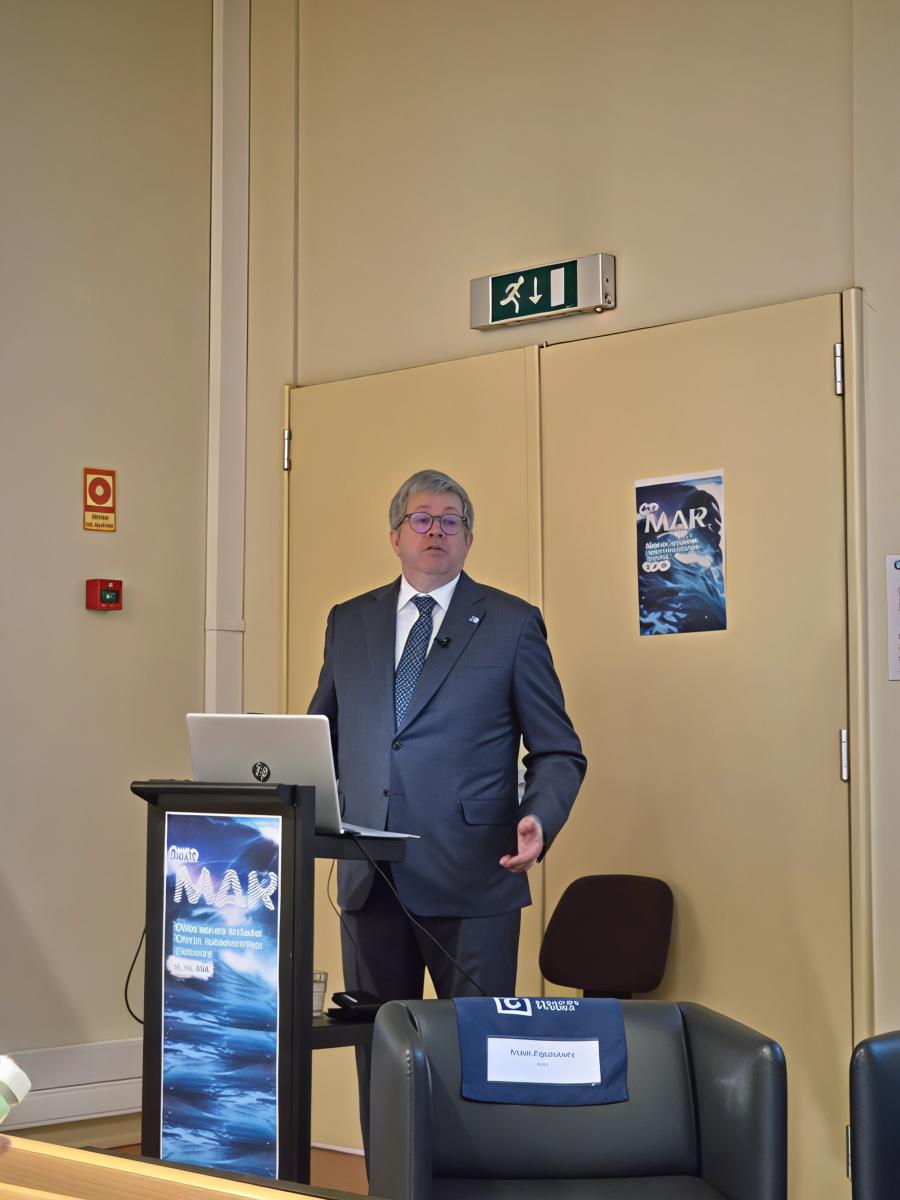
The ocean as an economic driver
The keynote was delivered by José Soares dos Santos, president of the Fundação Oceano Azul, member of the Board of Directors of Grupo Jerónimo Martins and alumnus of CIÊNCIAS ULisboa, who outlined an inspiring vision of the knowledge economy and the central role of the ocean within it. Drawing on a career built at the intersection of marine biology and the business world, he argued that Portugal "is at the centre of the world, not on the periphery" when it comes to maritime territory and geographical positioning in relation to major consumer markets. He also noted that, adding its territory to the Exclusive Economic Zone, Portugal rises directly to 20th place in the ranking of countries with the largest sovereign area, representing both a responsibility and an opportunity for science to play a central role in the future.
He recalled that the global ocean market already represents a value of around 2.2 trillion dollars, and that sectors such as marine biotechnology are growing at 8.5% per year.
"What we do not know always holds opportunity. The better we understand the ocean, the more opportunities will emerge," he said.
For the students in the room, the message was direct: "You leave here with an ability to analyse and understand the world that is unique. Do not let that go unnoticed in the job market."
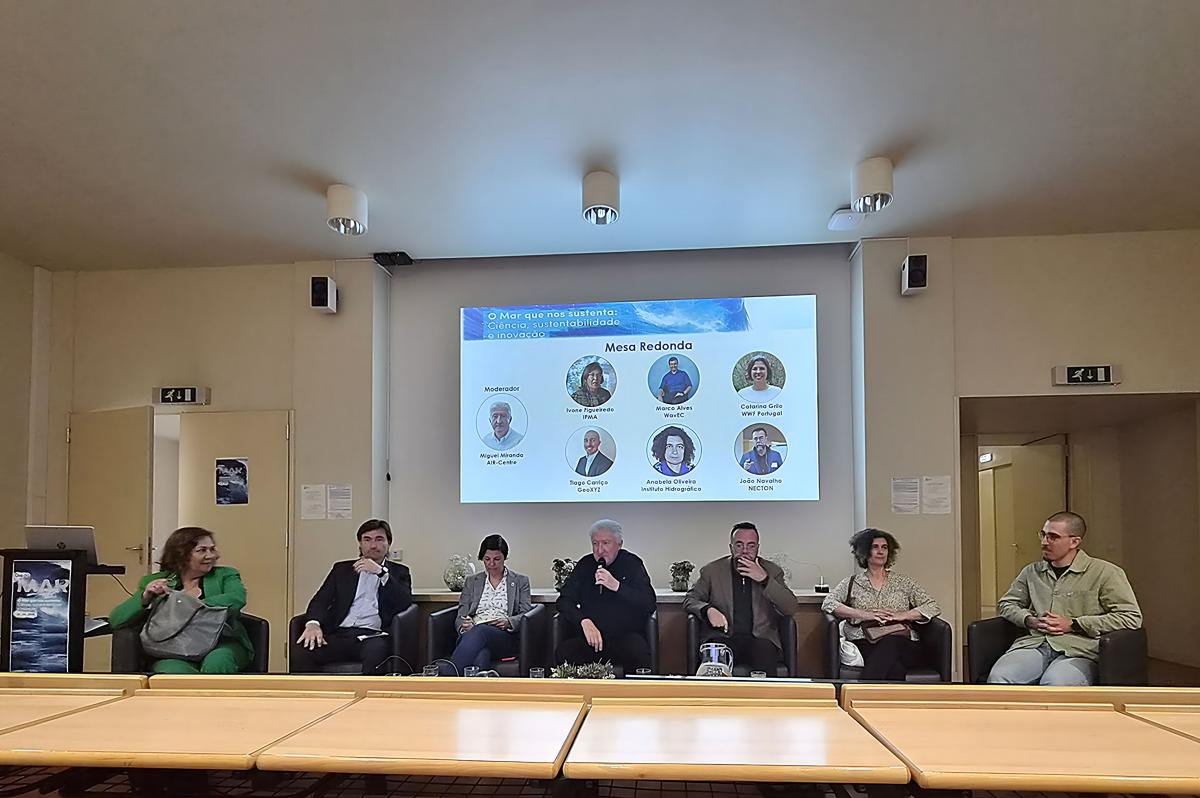
A conversation about the sea that sustains us
The event concluded with a panel discussion moderated by Miguel Miranda, executive director of the AIR Centre and former president of IPMA, with the participation of Tiago Carriço, cartographer and business development manager at GeoXYZ; Marco Alves, CEO and chairman of the board of WavEC; João Navalho, president and founder of NECTON; Catarina Grilo, director of conservation and policy at WWF Portugal; Anabela Oliveira, marine geology researcher at the Instituto Hidrográfico; and Ivone Figueiredo, director of the Department of Sea and Marine Resources at IPMA.
The discussion covered topics such as offshore wind energy, aquaculture, marine digital twins, marine conservation and the challenges of knowledge transfer between academia and the market. A clear consensus emerged: an interdisciplinary approach is urgently needed, bridging natural sciences, economics, engineering and public policy. The final message for the students was one of openness and curiosity: the opportunities are there, but it takes a willingness to recognise them and to work at the interfaces between fields of knowledge, precisely where value is created.
For MARE, the Dia do Mar is also an opportunity to reach future researchers. Many of the CIÊNCIAS ULisboa academics working in marine-related fields are researchers at the centre, and it is precisely these ties between teaching and research that lead many master's and doctoral students to develop their theses within the centre.
Text and image: Vera Sequeira