
MARE coordinates lamprey translocation action in the Mondego for the second consecutive year
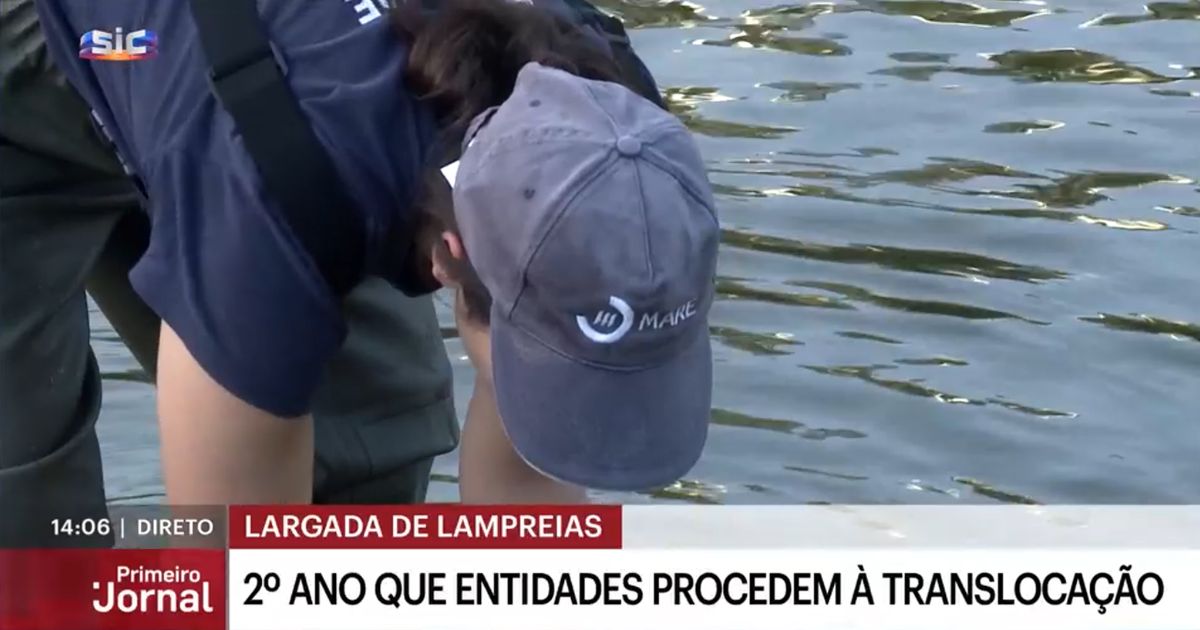
As part of ongoing conservation projects, around 30 lampreys were translocated in the River Mondego last week, in an initiative involving local authorities, the Intermunicipal Community of the Coimbra Region, and the University of Évora. Translocation is a process that involves capturing lampreys and releasing them closer to their spawning grounds, thereby increasing the species’ chances of reproduction. Further releases are planned until the end of April. This is an exceptional measure, implemented in a context where populations are showing worrying levels of decline.
The action received television coverage from SIC, with a report broadcast on Primeiro Jornal, highlighting public interest in conserving a species whose presence is deeply connected to the cultural, economic and ecological identity of the Coimbra region.
As Pedro Raposo de Almeida, Director of MARE and a specialist in this species, noted: “This translocation would not be necessary in years with normal lamprey population levels. However, given the current situation in Portugal, Spain and France, we believe that these measures help accelerate the process of recovery and repopulation upstream of Coimbra.”
Indeed, research conducted by MARE, led by Pedro Raposo de Almeida, shows a sharp decline in lamprey numbers recorded in Portugal. This trend is repeated across several river basins in Western Europe. In the case of the Mondego, the comparison is particularly striking: from exceptional years in which the research team recorded counts of around 20,000 lampreys, numbers have fallen to approximately 300 individuals counted at the Coimbra weir-bridge in the past year.
Among the main factors contributing to this decline are changes to rivers, many of human origin, which hinder migration. Nevertheless, there are some encouraging signs. Flood events recorded this year appear to have played a positive role by facilitating the animals’ progression upstream and slightly reducing fishing pressure.
Despite this temporarily favourable context, the recovery of the species depends on more structural, long-term factors. The life cycle of this lamprey species spans 7 to 8 years and takes place between river and sea environments. It therefore depends not only on river conditions but also on the state of marine populations. Pedro Raposo de Almeida stresses that ensuring successful reproduction this year is essential, but it does not guarantee favourable conditions in the years ahead. Given the species’ life cycle and MARE’s research data, the coming years are unlikely to be particularly strong. The researcher therefore emphasises the need for stability and the continued implementation of conservation and recovery actions.
This initiative was part of the actions of the Life4Lamprey project, promoted by the Intermunicipal Community, with funding from the European Commission.