
Ocean Research Forum discusses priorities for marine science in the next decade
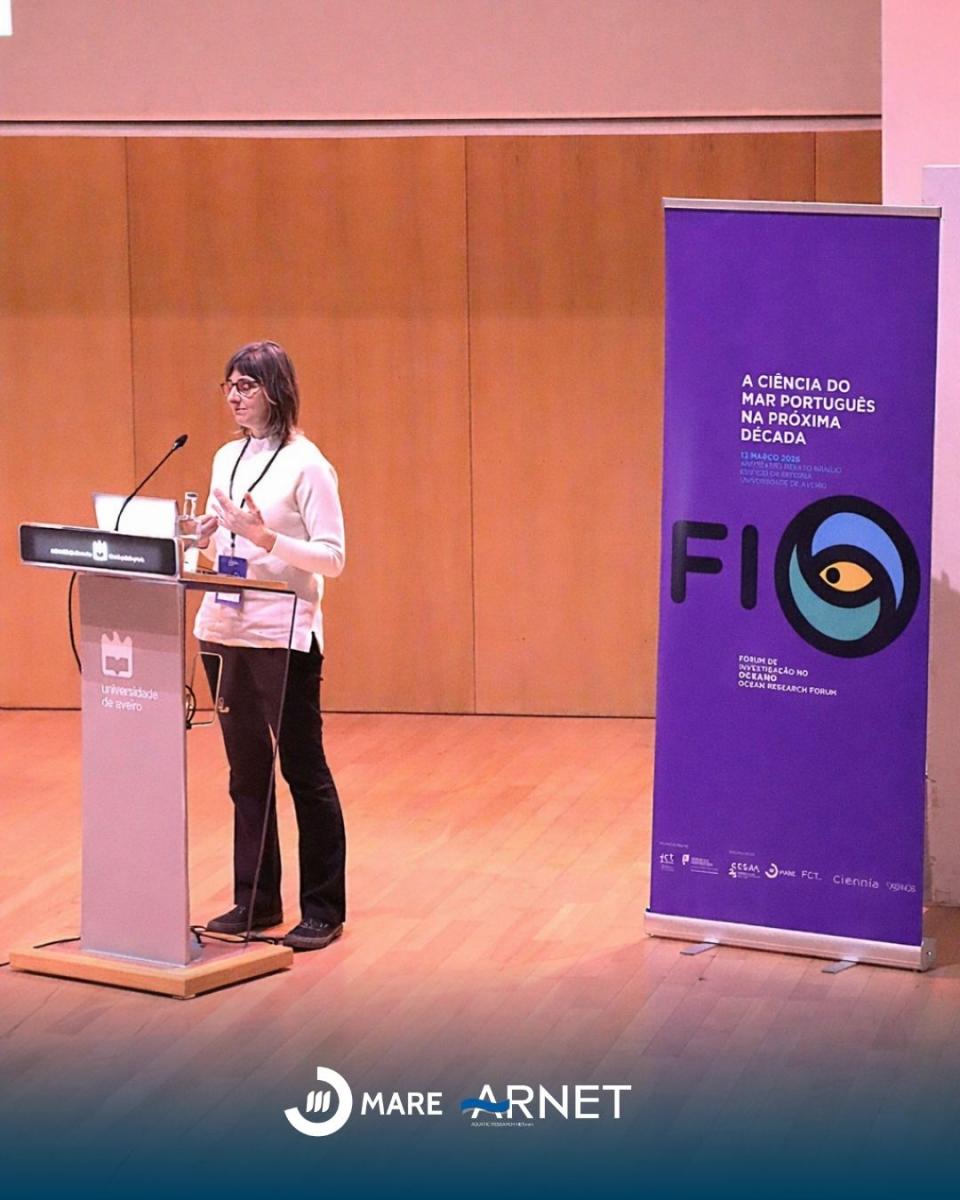
On 13 March, CESAM and the University of Aveiro hosted the 1st Ocean Research Forum, a meeting that brought together researchers, policy stakeholders connected to the ocean sector, and representatives of scientific institutions to discuss priorities for marine science in Portugal over the next decade.
The initiative brought together the country’s main marine research centres — MARE, CESAM, CIIMAR, CCMAR and OKEANOS — aiming to foster a shared strategic vision for marine research in Portugal. The discussions and contributions made during the day will be incorporated into a document compiling the main recommendations from the working groups, which are formed by representatives of the five organising institutions. This document will then be submitted to the relevant authorities, outlining a joint vision for ocean research priorities in Portugal for the upcoming decade.
José Guerreiro, President of the Instituto Português do Mar e da Atmosfera (IPMA), opened the meeting by outlining some of the institute’s strategic priorities and emphasising the role of national meteorological and oceanographic observation infrastructures in supporting both science and society.
“This meteorological network ensures the management framework and the initiatives related to civil protection, but it is also a support for the economy.”
Throughout the morning, different working groups shared their contributions. In the areas of resource management, biodiversity, and conservation, priorities identified included developing new ecological indicators, improving understanding of the cumulative impacts of human activities, and strengthening ecosystem-based management approaches. These conclusions were presented by Paula Chainho (MARE | ARNET, Faculdade de Ciências da Universidade de Lisboa) on behalf of the group.
“Applied research can only exist if it is supported by solid fundamental research. We need to consolidate knowledge on habitats, biodiversity and ecosystem functioning.”
This was followed by the presentation from Bernardo Duarte (MARE FCUL | ARNET) on behalf of the working group addressing pollution and coastal impacts. Among the key challenges identified were the increasing diversity of contaminants in marine ecosystems and the necessity to integrate the study of these pollutants with the impacts of climate change.
“We currently face a myriad of contaminants, some of them still poorly understood, and we need integrated scientific knowledge to address these new challenges.”
Among the priorities highlighted were strengthening environmental monitoring networks and harmonising data collected by various institutions to enhance risk assessment and support informed management decisions.
Also present at the meeting, the Secretary of State for Fisheries and the Sea, Salvador Malheiro, highlighted the central role of science in developing a sustainable blue economy in Portugal. In his speech, he emphasised the importance of aligning different agendas, namely those related to climate, conservation, and the economy, and argued that scientific research should help identify new pathways and validate solutions that enable the country to harness the potential of the blue economy without compromising environmental protection.
In the afternoon, the discussion continued with the presentation of the conclusions of the working group on marine and coastal spatial management, delivered by Adelaide Ferreira (MARE FCUL | ARNET | IPMA). The group emphasised the rapid development of maritime spatial planning over the past decade, and the necessity to update governance models to accommodate new ocean uses and ongoing environmental changes.
“We are at a historical moment of potential change. We absolutely need to move from static management and planning models to dynamic governance models that allow adaptive management.”
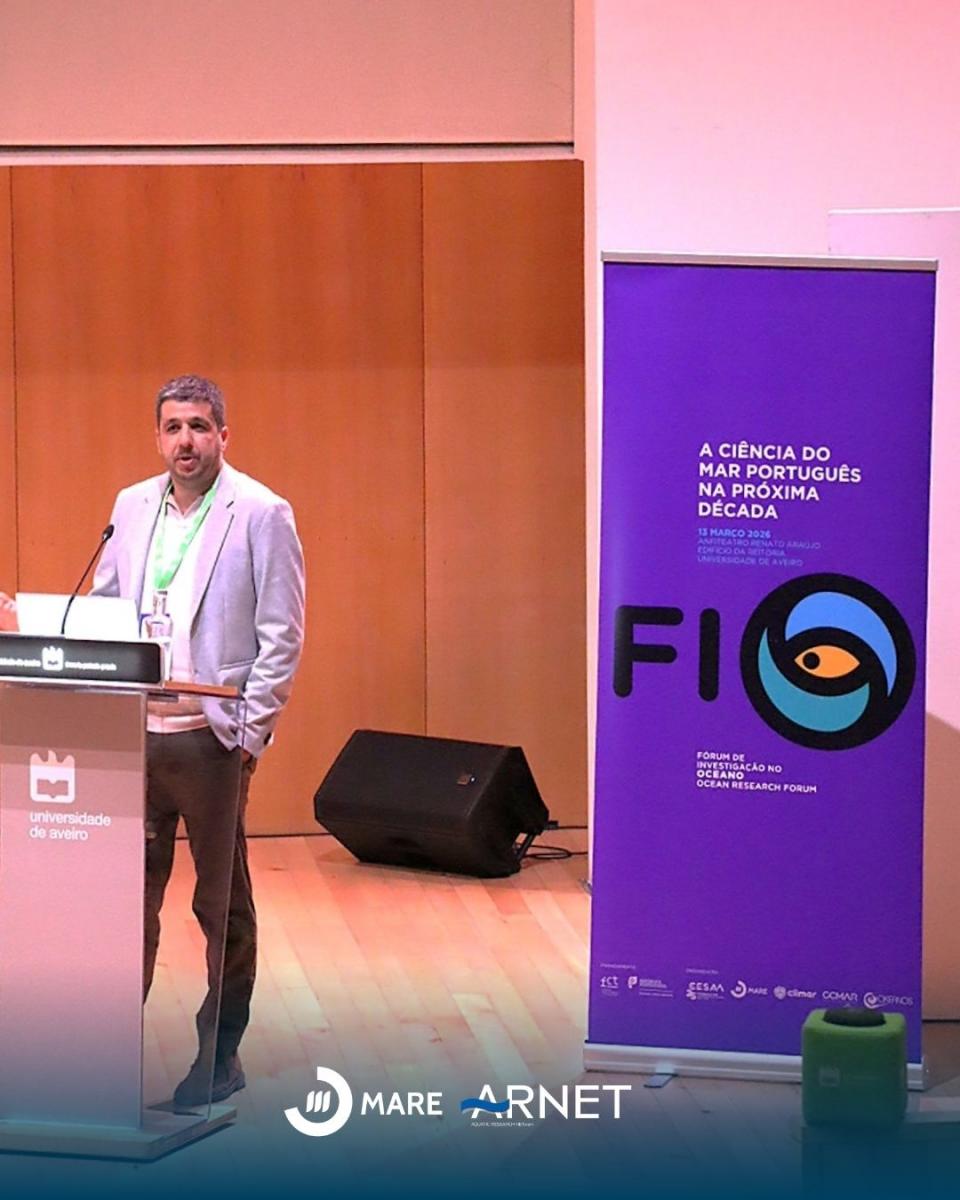 Among the challenges identified were integrating emerging ocean uses, such as offshore renewable energy, effectively implementing marine protected areas, and strengthening the scientific basis supporting spatial planning and management processes.
The session dedicated to education and training, presented by Rute Martins (CCMAR) and Ricardo Salgado (MARE | ARNET, Instituto Politécnico de Setúbal), analysed the national educational landscape in marine sciences and technologies. The survey identified 14 higher education institutions offering programmes in this field, totalling 25 bachelor’s degrees, 22 master’s degrees, and 17 doctoral programmes. The analysis revealed a strong predominance of traditional marine science disciplines, particularly marine biology, ecology and conservation, while also highlighting gaps in emerging areas related to marine technology and the blue economy.
“Undergraduate programmes are decisive in shaping training. If certain topics or skills are not addressed within the curricula, students will not acquire the competences needed to perform certain tasks.”
The programme also featured several discussion sessions with participants. One of these forums, moderated by Pedro Raposo de Almeida, Director of MARE | ARNET at the University of Évora, focused on scientific priorities and the necessity for improved coordination among research institutions.
Presenting the overall conclusions of the meeting, Adelino Canário (CCMAR, University of Algarve) highlighted the strong agreement among the priorities identified by the different working groups and underlined the importance of turning this collective exercise into a structured scientific agenda for the coming years.
“There is a strong convergence among the priorities identified by the different groups. The quality of the work produced was very high, and we already have substantial material to move forward.”
The closing session featured an intervention by Helena Canhão, Secretary of State for Science and Innovation, who emphasised the importance of discussing the future of scientific research in a coordinated manner and preparing the national research system to tackle ocean-related challenges.
“Discussing where we want to be in ten or twenty years helps us prepare the scientific system to seize the opportunities.”
The 1st Ocean Research Forum thus marked a significant moment of collective reflection among Portugal’s leading marine research institutions, helping identify research priorities and enhancing scientific collaboration on the major challenges facing the ocean in the coming decades.
Know more:
Text: Vera Sequeira
Photos: Carlos Carneiro and Vera Sequeira